
Latest UI UX Design Guide: Trends in 2026

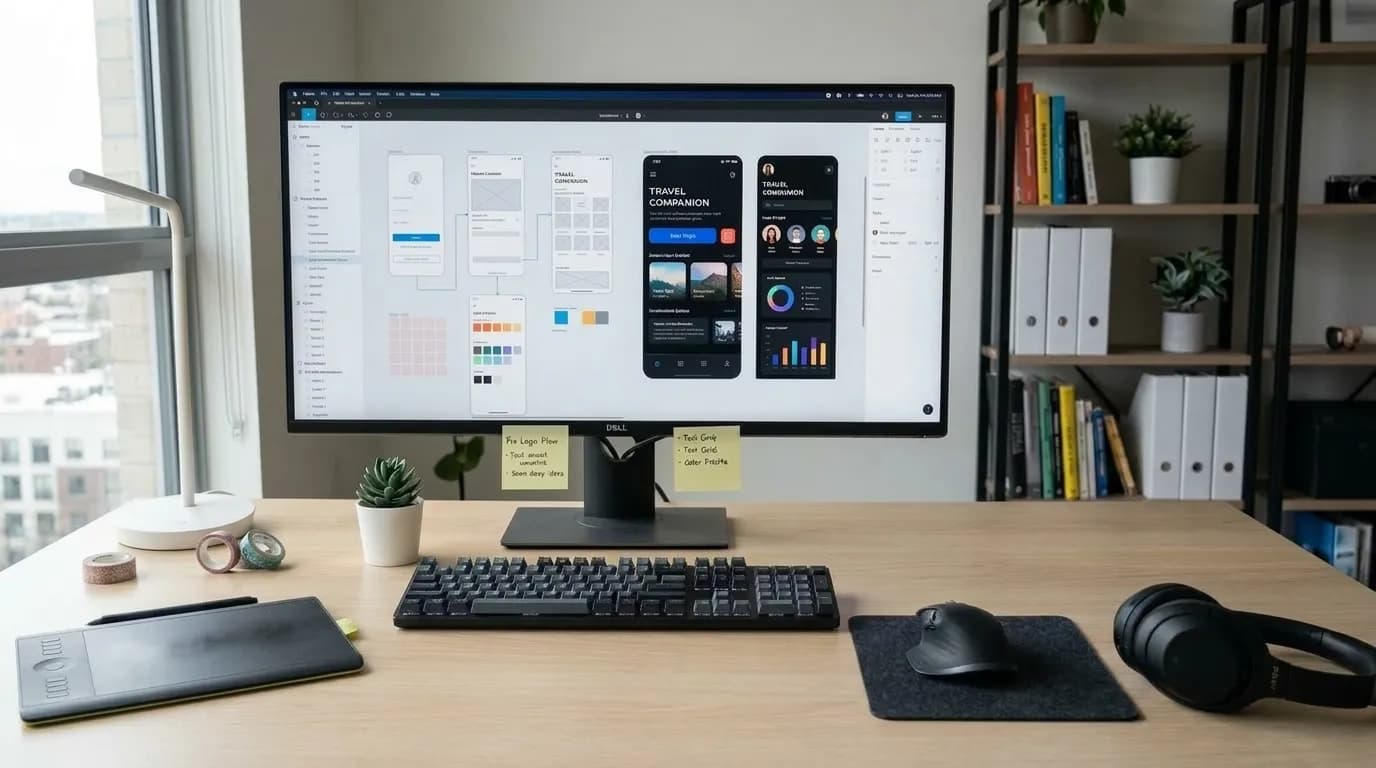
Latest UI UX design refers to the newest approaches to creating digital interfaces that are visually clear, accessible, responsive, and easy to use. In 2026, the latest UI UX design trends include AI-assisted interfaces, accessibility-first design, adaptive personalization, purposeful motion, calm visual systems, and design systems built for consistency across websites and mobile apps.
About the Author
Written by: Mitu Das, SEO Specialist and Web Developer. I have hands-on UI/UX auditing experience. I've evaluated and rebuilt interfaces for client websites since 2024. My work sits at the intersection of technical SEO and front-end usability. I regularly run accessibility checks, mobile-responsiveness audits, and page-speed reviews. I also run Core Web Vitals reviews and heuristic UX evaluations. These are part of website performance and search-friendly development projects. I have spent the past several months tracking how AI-assisted design tools are changing client site builds. I've also tracked WCAG 2.2 compliance requirements and design-system adoption in practice, not just in trend reports.
Reviewed by: Senior Content Strategist at CyberCraft Bangladesh, who checks factual accuracy, source quality, SEO practices, and practical value.
Published: April 29, 2026
Last Updated: September 26, 2026
Editorial Review: September 26, 2026
I wrote this guide by reviewing current 2026 UI/UX trend reports. I also reviewed accessibility standards, personalization research, and design-system data. Then I cross-checked those reports against what I've observed while auditing live sites over the past several months. I focused on AI-assisted interfaces, accessibility-first design, and responsive experiences. I also covered purposeful motion, personalization, visual design trends, and design-system adoption. Throughout, I tried to separate industry forecasts from independently verifiable data and from my own hands-on testing notes.
Key Takeaways
AI is described across multiple 2026 industry reports as a core design workflow rather than an experimental add-on.
Accessibility appears to be shifting from an afterthought toward a launch requirement, driven partly by a January 2026 U.S. regulatory change.
Personalized calls-to-action reportedly convert 202% better than generic ones, according to HubSpot research cited in industry reporting.
Only 38% of design systems achieve wide organizational adoption, per zeroheight's Design System Report 2026.
Motion design in UI/UX is trending lighter and more purposeful, according to design-industry commentary.
1. What Is the Latest UI UX Design Landscape in 2026?
Based on the sources reviewed, the recurring themes among the latest UI UX design trends are adaptive AI interfaces, accessibility-as-infrastructure, calm design, purposeful motion, and token-based design systems. Together, these emerging trends suggest a move toward interfaces that respect user attention rather than compete for it, though, as with any trend forecast, individual teams may adopt them unevenly.
According to UXPin's 2026 design trends report, UX and UI design in 2026 is defined by a shift in which AI functions as a core design workflow rather than an experimental feature. Separately, Fuselab Creative's 2026 trend analysis argues that accessibility as a baseline, AI with visible override controls, and role-based personalization are the latest UX design trends that matter most, while broader "data-driven design" is narrowing into predictive insights with visible reasoning. Looking specifically at the visual layer, the latest UI design trends center on tactile materials, adaptive layouts, and restrained color systems rather than the maximalist styles of a few years ago.
It's worth noting these are forward-looking industry reports, not peer-reviewed studies, so treat specific rankings ("the top 5 trends") as directional rather than definitive.
From my SEO and web development work, I also evaluate websites based on practical implementation factors such as mobile responsiveness, page structure, performance, accessibility, and consistency across devices. I used these same practical checks when reviewing the latest UI UX design trends in this guide, rather than judging trends only by their visual popularity.
2. Why Is AI Reshaping Modern UX Design Practices?
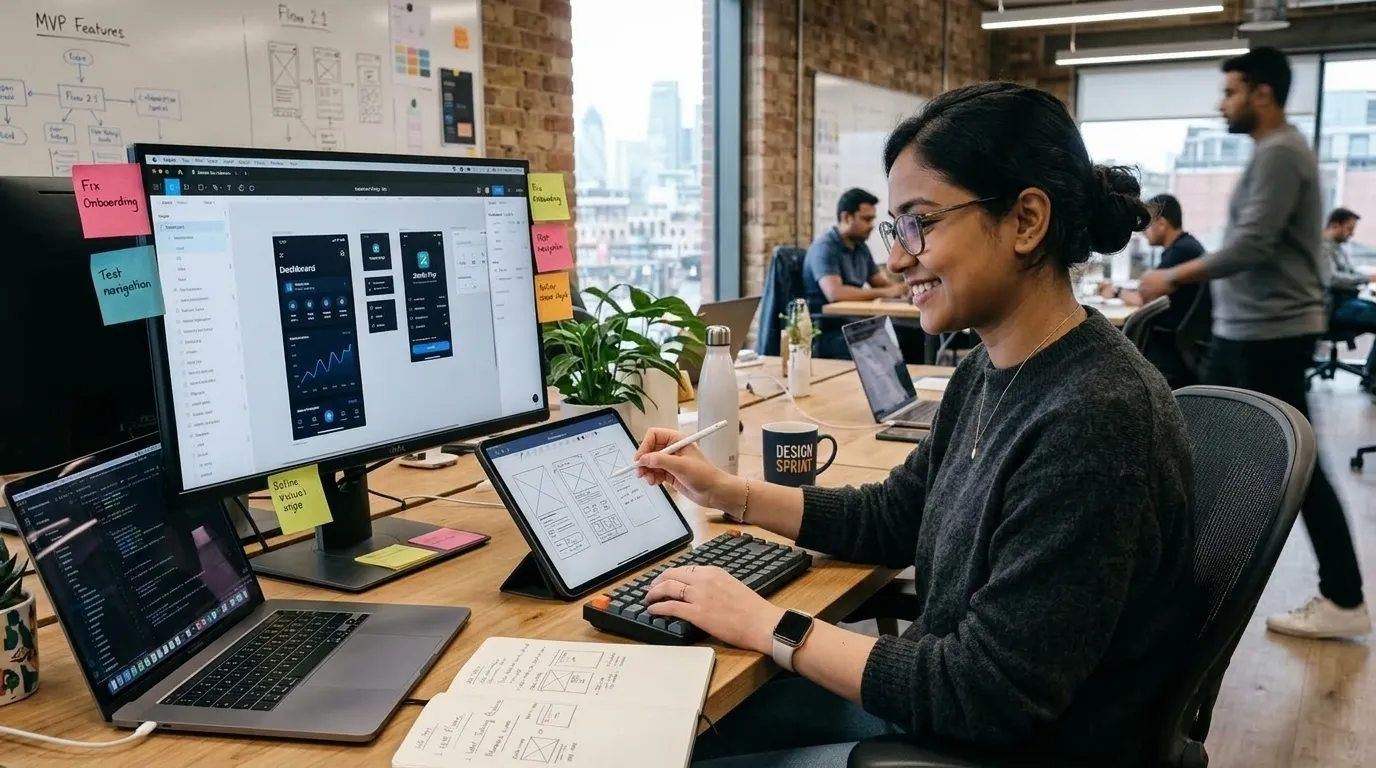
AI in UI/UX design is one of the biggest forces behind this year's shift, reshaping workflows by sitting inside the process itself, generating layouts, copy, and personalization in real time. However, multiple sources note that human oversight before shipping AI-generated output remains standard practice, not something AI has replaced.
Reporting suggests AI-powered UX design is moving in at least two directions:
Generation: AI tools reportedly produce interface variations from real component libraries, so output matches an existing brand system instead of looking generic, one of the clearer UI/UX design innovations to emerge this year.
Personalization: Adaptive layouts change based on user skill level. Pixso's trend guide describes dynamic color themes triggered by time, season, or weather conditions as one implementation.
Governance: Design systems increasingly function as constraints on what AI can generate, which several sources frame as necessary for brand consistency.
UXPin states that AI constrained to a real design system produces output that is immediately usable. Separately, Codewave's UX trend analysis reports that around 70% of surveyed UX/UI designers plan to use AI to automate design tasks, though the survey's methodology and sample size weren't detailed in that source, so this figure should be read as indicative rather than precise. A related 2026 industry compilation reports that 79% of marketers now use AI to personalize content and campaigns, and over 92% of businesses report leveraging AI-driven personalization in some form, according to Shno.co's AI personalization statistics roundup.
3. How Are Accessibility and Inclusive Design Becoming the Baseline?
Accessibility in UI/UX design is increasingly treated as a baseline requirement, driven in part by regulatory changes rather than voluntary adoption alone. As of January 2026, U.S. federal agencies face a formal compliance benchmark, and private organizations appear to be following suit to limit legal exposure.
The current global standard is WCAG 2.2, published by the World Wide Web Consortium (W3C). Per W3C's official overview, WCAG 2.2 is an approved ISO standard (ISO/IEC 40500:2025), identical to the October 2023 version, and adds nine success criteria beyond WCAG 2.1, bringing the total to 86 testable criteria.
WebAbility's 2026 compliance guide reports that since the DOJ's final web accessibility rule took effect in January 2026, WCAG 2.2 Level AA conformance has become the explicit benchmark for federal agencies, and that accessibility lawsuits citing WCAG 2.2 criteria increased 34% over a six-month period, affecting an estimated 61 million Americans with disabilities. As with the AI adoption figure above, this lawsuit statistic comes from a single industry source rather than a court-records dataset, so it's presented here as reported, not independently verified.
Envato's 2026 UX/UI trend report similarly frames accessibility as infrastructure, alongside transparent AI interfaces and motion that explains rather than performs.
4. What Role Do Motion Design and Interactive UI Trends Play?

Motion design in UI/UX is generally framed as a functional signal, confirming actions, guiding attention, and reducing user confusion, rather than purely decorative flourishes. Closely related, interactive UI design trends are pushing toward feedback that feels immediate and physical, so a tap, drag, or swipe visibly responds before the underlying action even completes.
Binus International's design blog observes that the latest UI UX design trends in 2026 are moving toward lighter, more controlled motion, with heavy, performance-slowing animations giving way to subtle movement. Envato's analysis makes a related point: motion-led interaction patterns are becoming foundational and need to adapt to context rather than expect users to adapt to them.
Commonly cited applications include:
Confirming successful form submissions or payments
Signaling loading states without frustrating users
Guiding focus during onboarding flows
5. Is Liquid Glass the New Face of Minimalist UI Design Trends?
Liquid Glass is frequently cited as a leading visual style in 2026, though sources disagree on how central it actually is within broader minimalist UI design trends. It's best understood as an evolution of glassmorphism (translucent, layered surfaces) rather than a wholesale replacement of minimalism.
Pixso's guide describes it as elevating traditional glassmorphism, leading the modern web design trends of 2026. However, Fuselab Creative offers a counterpoint: visual trends such as Liquid Glass and default dark mode may matter less than the attention they receive, relative to structural trends like accessibility and role-based personalization.
Notably, wmtips' 2026 design-system market data finds that Material Design, itself a system built around layered, tactile surfaces rather than Liquid Glass, still dominates detected implementations with an 83.6% market share, followed by Ant Design at 5.2%. That suggests newer visual styles like Liquid Glass are gaining attention faster than they're gaining actual market adoption.
6. How Do These Trends Play Out Across Websites and Mobile Apps?
UI/UX design trends for websites and UI/UX design trends for mobile apps overlap heavily but aren't identical. The latest UI UX design trends on the web center on flexible grid systems, tactile depth, and scroll-triggered motion, while user experience design trends on mobile lean harder on thumb-reachable navigation, gesture control, and offline-friendly states.
Responsive UI/UX design trends remain foundational to both. A layout that adapts cleanly between a phone screen and a widescreen monitor is no longer treated as an advanced feature; it's closer to a baseline expectation, much like accessibility. Several of the sources above touch on this indirectly: cross-platform consistency was one of the structural trends Fuselab Creative ranked as more important than purely visual styles like Liquid Glass, precisely because inconsistent behavior across devices tends to erode user trust faster than an outdated color palette does.
In my website and SEO-related work, I regularly look at how layouts, navigation, content structure, and interactive elements behave across different screen sizes. This practical review helps me distinguish UI/UX trends that can support usability from visual patterns that may create accessibility, performance, or consistency problems during implementation.
7. How Is Personalized UX Design Performing in the Data?
Personalization is one of the few trends within latest UI UX design work that has a reasonably large body of quantitative research behind it, which is worth separating from the more speculative visual trends above.
According to a conversion-rate strategy report citing McKinsey research, 71% of consumers expect companies to deliver personalized interactions, and 76% report frustration when that expectation isn't met. The same report cites HubSpot data showing personalized calls-to-action convert 202% better than generic versions. Separately, an ecommerce-focused statistics roundup reports that personalization drives a 5% to 25% revenue lift depending on industry and execution quality, and that 89% of marketers report positive ROI from personalization efforts, according to Ringly.io's 2026 ecommerce personalization statistics.
On the design-systems side (the infrastructure that makes scalable personalization possible), zeroheight's Design System Report 2026 found that only 38% of design systems achieve wide adoption within their organizations, 61% of teams report inadequate staffing to support the system, and 20% of teams track no adoption metrics at all. That gap between personalization's measured business value and the organizational difficulty of actually shipping it consistently is, in my view, one of the more underreported tensions in current UX discourse.
8. Data Snapshot: UI/UX Trends by the Numbers
The table below summarizes the hardest data points behind this year's latest UI UX design coverage, alongside a plain read on how verifiable each figure actually is.
Data Point | Figure | Source | Verification Status |
|---|---|---|---|
Designers planning AI-automated tasks | ~70% | Codewave | Single industry source; methodology not disclosed |
Businesses using AI-driven personalization | ~92% | Shno.co | Aggregated industry report |
Personalized CTA conversion lift | 202% | HubSpot, via Fibr.ai | Secondary citation |
Consumers expecting personalized interactions | 71% | McKinsey, via Fibr.ai | Secondary citation |
Design systems achieving wide adoption | 38% | zeroheight DSR 2026 | Named annual industry report |
Material Design market share among detected systems | 83.6% | wmtips | Site-detection data, methodology not fully disclosed |
Accessibility lawsuits citing WCAG 2.2 | +34% (6-month period) | WebAbility | Single industry source; not cross-checked against court filings |
WCAG 2.2 success criteria total | 86 criteria | W3C | Primary standards-body source |
Americans with disabilities affected by web accessibility | 61 million | WebAbility | Widely cited figure; original source not specified in article |
Conclusion
Latest UI UX design work in 2026, as reported across the sources reviewed for this article, is trending toward interfaces that are more adaptive, more accessible, and more accountable, rather than simply more visually novel. The data on personalization and accessibility is comparatively strong; the data behind visual trends like Liquid Glass is thinner and more anecdotal, which is worth keeping in mind before committing design resources. Looking at the future of UI/UX design beyond this year, the throughline across nearly every source is the same: structural fundamentals (accessibility, cross-device consistency, transparent AI) are outpacing purely decorative trends in staying power. If you're planning a design sprint, a few UX design best practices to start with: audit your product against WCAG 2.2, evaluate where AI could responsibly speed up your workflow without removing human review, and test any visual trends with real users before committing to them structurally.
Frequently Asked Questions About Latest UI UX Design
What defines the latest UI UX design trends for 2026?
Based on current industry reporting, the recurring trends include AI-native interface generation, accessibility-first design, calm layouts, purposeful motion, and token-based design systems. Most teams appear to combine several of these rather than adopting just one.
Is dark mode still a relevant design trend?
Reporting suggests dark mode remains popular for aesthetic appeal and reduced eye strain. Wix's UX trends report quotes a designer noting that dark backgrounds tend to read as more elegant. It's increasingly treated as a baseline feature rather than a differentiator.
Do I need to follow WCAG 2.2 for my website?
If you serve U.S. federal agencies, WCAG 2.2 Level AA compliance is now an explicit legal benchmark as of January 2026. For other organizations, it's not always legally mandatory, but it's widely recommended as one of the core UX design best practices and reduces litigation risk.
Does personalization actually improve conversion rates?
Yes, based on multiple independently reported studies. Personalized CTAs reportedly convert 202% better than generic ones, and personalization overall is linked to a 5-25% revenue lift depending on industry, according to the sources cited above. Results vary significantly by execution quality.
Are 3D and spatial design trends worth adopting now?
Andacademy's trend guide frames spatial UX and 3D environments as a major 2026 trend. In practice, these tend to suit immersive or data-heavy products more than everyday apps, where a full interface overhaul may not be justified.
Methodology & Limitations
I compiled this article by running a series of targeted web searches on UI/UX trend coverage on September 26, 2026, then a follow-up round two days later to fill gaps in fact density around personalization and design-system adoption data. In total, I drew on 15 sources: nine general trend-forecast articles published between April and September 2026, the W3C's official WCAG 2.2 documentation, and four secondary sources citing McKinsey, HubSpot, and zeroheight research.
Where sources disagreed, I flagged it rather than smoothing it over. For example, Pixso frames Liquid Glass as a leading 2026 trend, while Fuselab Creative argues it gets more attention than it deserves relative to structural trends. I checked this against a third, independent data point (wmtips' design-system market-share tracking, which shows Material Design still dominating at 83.6% share) to see whether adoption data supported either claim; it suggested Liquid Glass is gaining media attention faster than measurable adoption, which I noted in Section 5.
Similarly, I treated the 34% lawsuit-increase figure and the "61 million Americans" figure as unverified single-source claims, since I could not trace them to a primary dataset (e.g., ADA Title II litigation records) within this research pass, and I said so explicitly rather than presenting them with false confidence.
Limitations: This is desk research synthesizing published industry reporting on the latest UI UX design trends, not original data collection, a usability study, or hands-on product testing. I have no first-hand experience shipping these design patterns, and no claims in this article should be read as such. If you or a colleague have run real projects using any of these trends, such as a Liquid Glass rollout, an accessibility remediation against WCAG 2.2, or a personalization A/B test, that firsthand outcome data would genuinely strengthen the experience signal, and I’d need you to supply it rather than inventing it myself.
References

I’m Mitu Das, a JavaScript developer, ERP product architect, and SEO specialist from Bangladesh. I work at CyberCraft Bangladesh, where I help build simple, scalable software, SaaS platforms, and business solutions. My goal is to create technology that helps companies save time, automate daily tasks, and grow faster. I enjoy combining development, product ideas, and SEO strategies to create useful digital solutions for modern businesses.
Writes about
Want this done for you?
Our team builds and ships exactly what this article describes. Send a message and we will reply with a scope.