Automate. Accelerate. Scale.

AI Automation Company in Bangladesh for Workflows, Chatbots and AI Agents

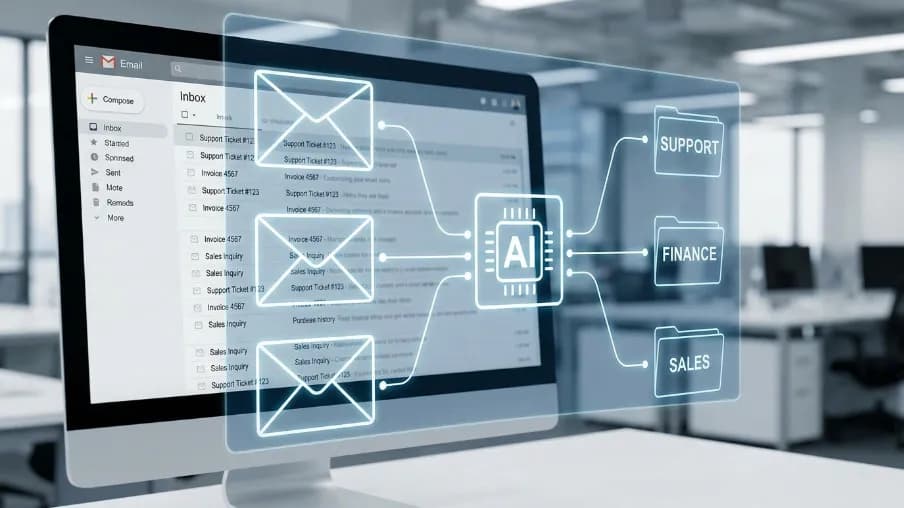
CyberCraft Bangladesh is an AI automation company in Dhaka. We automate repetitive work between your apps, build chatbots that reply in English and Bangla, and create AI agents that check with your team before important decisions. Prices start from à§³50,000, quoted after we review your process.

Starting from
à§³50,000
Workflow · Customer enquiry to orderExample data

Trigger

New customer message

WhatsApp · Email · Web form

AI step

Understand the request

Stock and delivery question

Action

Check stock

ERP inventory

Action

Get price

Price list

AI step

Draft the reply

Written in 6 seconds

Approval

Person approves

Orders above à§³50,000

Action

Send, update CRM

Runs after approval

WhatsApp · 10:42 AM

Do you have 12 black mesh chairs? Need them in Gulshan by Thursday.

Yes, 18 in stock. 12 pieces come to à§³1,02,000, delivered Wednesday.

This week

312 tasks handled

71% completed without help

Why businesses in Bangladesh are automating now

AI is now part of everyday work in most organisations, yet staff still say they are short of time. In Bangladesh, use of AI tools is well below the world average. An AI automation company in Bangladesh can help you start with the tasks that take up most of your team's time.

Nearly 9 in 10
respondents say their organisation uses AI regularly in at least one business function
McKinsey, The State of AI, August 2026
80%
of workers and leaders say they lack enough time or energy to do their work
Microsoft Work Trend Index, April 2025
8%
of working-age people in Bangladesh used a generative AI product in June 2026, against 18.8% worldwide
Microsoft AI Economy Institute, September 2026

Sources: McKinsey, The state of AI in 2026: On the road to ROI, Microsoft Work Trend Index 2025, Microsoft AI Diffusion Report, Q2 2026

AI automation services: what we build, what you receive, how it is measured

Each part of the service is scoped around a real process in your business and ends in something you can test: a working flow, a document, or a figure you can track.

Automation activity · todayExample data

Tasks handled

312

Completed without help

71%

Approved by a person

24%

Median first reply

40 s

TimeTriggerWhat the automation didResult
10:42WhatsApp enquiry: stock and deliveryDrafted reply from inventory and price listWaiting for approval
10:39Supplier invoice received by emailRead 14 line items, matched to purchase orderCompleted
10:31Website form: quotation requestCreated lead in CRM, sent price sheetCompleted
10:24Refund request above à§³10,000Summarised the case for the accounts teamSent to a person
10:18Daily sales reportCompiled figures, emailed to managementCompleted
10:05Low-stock alert: 3 itemsDrafted purchase requisitionWaiting for approval
Example activity log with sample data. It shows what an automation records, not a client result.

Process audit and automation map

Business process automation starts with knowing how the process actually runs. We record each step, the software used, how often it happens and where mistakes occur, then rank tasks by effort and by how safely they can be automated.

  • Step-by-step process mapping
  • Volume and handling time per task
  • Exceptions staff handle from memory
  • Tasks better left manual
You receive
An automation map of candidate tasks, the approach suggested for each, and the order to build them in.
How we measure it
Baseline volume, handling time and error rate for each process before any change.

Workflow automation between apps

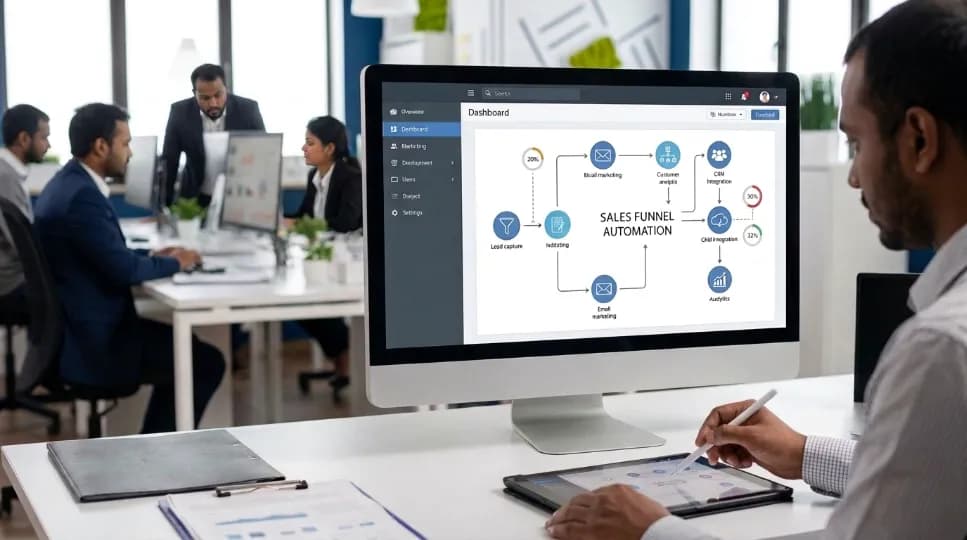
Data that staff copy between systems, such as a web order retyped into a spreadsheet and then into accounts, moves on its own once a trigger fires. Each workflow has a clear trigger, fixed steps and an alert when something fails.

  • Triggers from forms, email and orders
  • Records updated across apps
  • Approvals routed to the right person
  • Scheduled reports
You receive
Working workflows in your accounts, each with a diagram and written notes.
How we measure it
Runs completed without manual help, failed runs, and time from trigger to finished task.

AI chatbot development in English and Bangla

Chatbots answer customers on your website, WhatsApp and Facebook Messenger from your own product, price and policy information. They reply in English, Bangla and Bangla typed in English letters, and hand the chat to a person when they cannot help.

  • Website, WhatsApp and Messenger
  • Orders, bookings and leads captured
  • Handover to staff with the full chat
  • Internal assistants for staff
You receive
A chatbot live on your chosen channels, with a log of conversations and of questions it could not answer.
How we measure it
Conversations resolved without handover, handover rate, and time to first reply.

Document processing and data extraction

Invoices, purchase orders, forms and bank statements arrive as PDFs, scans or phone photos. AI reads the fields you need, checks them against your rules, and sends anything unclear to a person before it enters your system.

  • PDFs, scans and photos
  • Totals and duplicates checked
  • Export to accounts, ERP or spreadsheet
  • Low-confidence fields flagged
You receive
A pipeline that turns incoming files into checked records, with a review screen for flagged items.
How we measure it
Field accuracy on a test set of your own documents, and the share needing manual correction.

AI agents for business

An AI agent carries out a task of several steps, for example finding a new delivery date in a supplier's email, updating the order and drafting a note to the customer. It can use only the tools and data it needs, and stops for human approval at the points you choose.

  • Multi-step tasks across systems
  • Access limited to named tools
  • Approval before set actions
  • Hands back to staff when unsure
You receive
An agent for one defined task, with written limits on what it may do and a log your team can inspect.
How we measure it
Tasks completed correctly on review, approvals rejected, and cases handed back.

Marketing automation

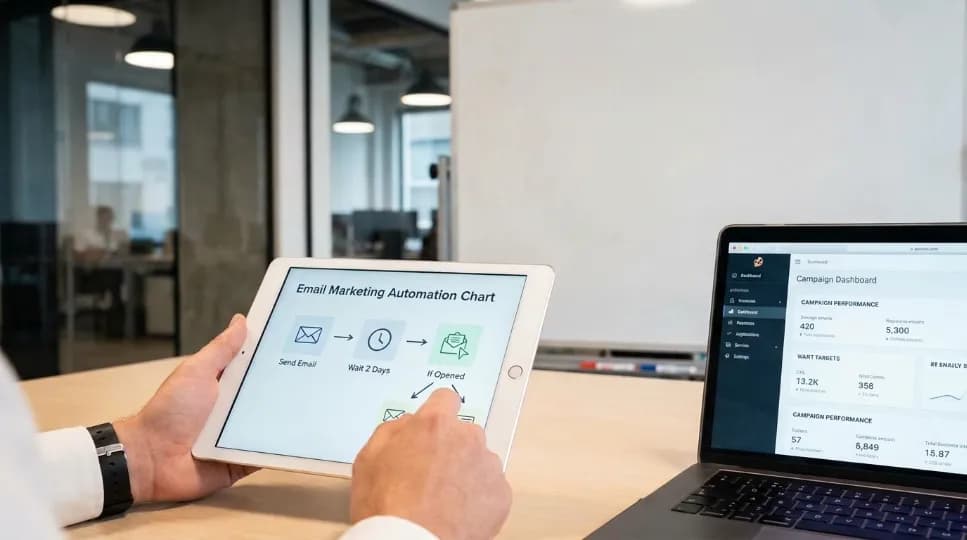
Follow-ups, customer segments and campaigns run from what customers do, not from what someone remembers to send. AI can draft message variations and suggest who to contact next, and a person approves campaigns before they go out.

  • Lead capture and scoring
  • Email, SMS and WhatsApp sequences
  • Segments from purchase history
  • Abandoned cart reminders
You receive
Customer journeys set up in your marketing tools or a system we build, with every trigger and message documented.
How we measure it
Open, click and reply rates for each journey, and leads moved to the next sales stage.

Integration with your ERP, CRM and other systems

Automation is only useful if it can act in the software you already run. We connect to ERP, CRM, accounting, ecommerce and messaging tools through their APIs, and write custom connectors for in-house systems that have none.

  • ERP, CRM and accounting software
  • Ecommerce and courier systems
  • Email, calendars and shared drives
  • Databases and spreadsheets
You receive
Tested connections to each system, with a record of what each one reads and writes.
How we measure it
Sync errors, records out of step between systems, and how long data takes to arrive.

Monitoring and human review

Once live, each automation records what it did, how long it took and what it cost to run. Alerts reach your team when a step fails or volumes change suddenly, so problems surface early rather than at month end.

  • Activity log for every run
  • Alerts on failures and unusual volumes
  • Review queue for uncertain cases
  • Running cost tracking
You receive
A monitoring view of volumes, errors, handovers and costs, plus a review queue your team works through.
How we measure it
Error rate over time, review queue size, and cost per completed task.

How an AI automation project is delivered

We start with one workflow and prove it on real data before automating more. Each phase ends with something you can review, and you decide whether to move to the next.

  1. A few days to 2 weeks

    Process audit

    The audit comes first, so the first build goes where automation is most likely to help. It ends with one workflow chosen and a written measure of success.

    • Workshops with the people doing the work
    • Current tools and data sources listed
    • Success measure agreed in writing
  2. 1 to 3 weeks

    Pilot on one workflow

    A first version runs on copies of real cases, or alongside staff still doing the task by hand, so results can be compared without risk to customers.

    • Prototype built on real examples
    • Tone, rules and limits adjusted with you
    • Decision to continue, change or stop
  3. 1 to 6 weeks

    Build and integrate

    The pilot becomes a production system connected to your live tools, with failure handling, user permissions and the screens your team will use.

    • Connections to live systems
    • User roles and permissions
    • Staff guide and training
  4. 1 to 2 weeks

    Testing with real data and human review

    Before launch, the automation runs against a set of past cases, including awkward ones, and a person checks every result.

    • Test set built from your own cases
    • Errors fixed and the tests rerun
    • Results compared with the success measure
  5. From launch

    Rollout and monitoring

    The automation goes live in stages, often one team or channel first, and is watched closely in the early weeks. Once it is stable, the next workflow on the map can begin.

    • Staged launch
    • Changes based on flagged cases
    • Next workflow planned

These durations are typical, not promised, and depend on the process, your data and how quickly access is arranged. Simple workflows combine some phases, while an agent working across several systems takes longer.

Rule-based automation, AI assistant or AI agent: which fits?

The right approach depends on how predictable the task is and what a mistake would cost. Many projects combine them, with rules doing most of the work and AI used only where a step needs reading or judgement.

ApproachSuitsExample tasksNeeds human review
Rule-based automationPredictable tasks with structured data and fixed stepsMoving web orders into accounts, payment reminders, daily stock reportsRarely for each result, as rules act the same way every time. Failed runs and outdated rules still need checking.
AI assistantReading or writing free text, with a person close to the resultAnswering product questions, summarising emails, drafting replies, sorting email by topicYes, where accuracy matters. Uncertain answers go to a person, and samples are checked regularly.
AI agentMulti-step tasks where the system chooses the next step and acts in other softwareHandling a delivery complaint end to end, researching a new lead and updating the CRMYes. A person approves actions that move money, change records or commit to customers, and every step is logged.

A task each person does differently, or one that happens only a few times a month, is usually better standardised or left manual first.

AI automation for your industry

The tasks worth automating differ by sector, and so do the data rules and the cost of a wrong answer.

Pricing starts from à§³50,000

Prices start from à§³50,000. Your quote follows a review of the process you want to automate, because the work depends on the task, your data and the systems involved.

What affects the cost

  • Steps and exceptions in the process
  • Number of systems to connect
  • Whether AI is needed or rules will do
  • Chatbot channels and languages
  • Volume and condition of documents and data
  • Amount of human review and approval built in
Get a quote for your project

Frequently asked questions

Is CyberCraft an AI automation company in Bangladesh or a software development company?

Both. CyberCraft Bangladesh is based in Dhaka, builds AI automation and custom software, and also offers website development, SEO and ERP development. We work with clients in Bangladesh and abroad, and meetings and demos can be held online.

Are there running costs after the automation is built?

Usually, yes. Hosting, AI usage and some channel fees, such as WhatsApp charges for certain business messages, rise with volume, so we estimate them from your expected usage before you approve the build. Build prices start from à§³50,000.

Where is our data processed, and who can see it?

That depends on the design, and we explain it before the build starts. Many AI models run on the provider's servers, often outside Bangladesh, so we send only the data each step needs, mask personal details where possible, and can keep sensitive steps on a server you control. Check the design against the data protection rules that apply to your business.

Will AI automation replace our staff?

It replaces tasks, not judgement. Retyping, sorting and answering the same question again move to the automation, while your team keeps the exceptions, approvals and customers who need a person. How you use the freed time is your decision, and reviewing the automation's output becomes part of someone's role.

Can the automation understand Bangla?

Yes. Current AI models handle typed Bangla well, whether it is written in Bangla script or in English letters, and messages that switch between Bangla and English. Results are less reliable for handwritten Bangla, poor scans and voice messages, so for those we measure accuracy on your own samples before deciding how much to automate.

What happens when the AI gets something wrong?

Mistakes are expected, so the system is built to catch them early and limit how far they spread. The log shows what the AI received and did, your team corrects the record or contacts the customer, and we find the cause, such as a missing fact, an unclear rule or a hard-to-read document. That case then joins the test set, so the fix is checked before it goes live.

Should we buy a ready-made tool instead of a custom build?

If a ready-made tool already does the job with your data and channels, use it. A custom build makes sense when the task depends on your own systems, rules or language needs, and many projects combine both.

What do you need from us during the project?

Someone who knows the process well and can give a few hours a week, real examples of the messages or documents involved, and access to the systems the automation will use. Before launch, you also choose who will review flagged cases.

In whose name should the AI and messaging accounts be set up?

We recommend your company's name for the AI provider, WhatsApp Business and hosting accounts, with our team given access to build and maintain them. The bills, data and phone number then stay with you if your team or supplier changes.


Tell us about your project

Share what you need and we will reply with a free quote within 24 hours.

Share: