Building the digital future

Website Development Company in Bangladesh for Business Sites, Online Stores and Web Apps

CyberCraft Bangladesh is a website development company in Dhaka. We design and build business websites, ecommerce stores and web applications that load quickly on a phone, take local payments and are easy for your team to update. Projects start from à§³30,000, quoted against a written scope.

Starting from
à§³30,000
yourbusiness.comExample data
YourBusinessCart (2)

Office furniture, delivered across Bangladesh

Pay with bKash, Nagad, card or cash on delivery.

Shop now

Mesh office chair

à§³8,500

Standing desk

à§³22,000

Filing cabinet

à§³6,200

Page speed report · mobile

96Performance
100Accessibility
100Best practices
100SEO

What an ecommerce website development company in Bangladesh has to plan for

A large audience is online, buyers are used to paying from a phone wallet, and about half of the world's websites still fall short of Google's speed and stability standards on mobile. A website development company in Bangladesh has to design for these conditions from the first sketch rather than patch them after launch. These three figures shape how we plan every site.

82.8M
people using the internet in Bangladesh
DataReportal, end of 2025
239M
registered mobile financial services accounts in Bangladesh
Bangladesh Bank, February 2025
48%
of mobile websites worldwide pass all three Core Web Vitals
HTTP Archive Web Almanac, July 2025 data

Sources: DataReportal Digital 2026: Bangladesh, Bangladesh Bank mobile financial services data, HTTP Archive Web Almanac 2025: Performance

Website design and development services: what we build, what you receive, how it is measured

Our web development services in Dhaka have eight parts, from the first planning call to the months after launch. Each part names what you receive and the check it has to pass before the work moves on.

Page speed report · yourbusiness.com · mobileExample data
96Performance
100Accessibility
100Best practices
100SEO

Core Web Vitals assessment: passed

  • Largest Contentful Paint · Loading

    1.8 s

    Good is 2.5 s or less

  • Interaction to Next Paint · Responsiveness

    120 ms

    Good is 200 ms or less

  • Cumulative Layout Shift · Visual stability

    0.03

    Good is 0.1 or less

Example page speed report with sample data. The thresholds are Google's published Core Web Vitals limits.

Discovery and planning

We learn what the website must achieve, who will use it and what your staff will need to manage. The outcome is a plan both sides agree before any design work starts.

  • Business goals and target visitors
  • Sitemap and page list
  • Features and integrations
  • Content you have and content still needed
  • Reference sites you like
You receive
A written scope with the sitemap, feature list, timeline and price.
How we measure it
Every page and feature in the finished site traces back to an item in the scope.
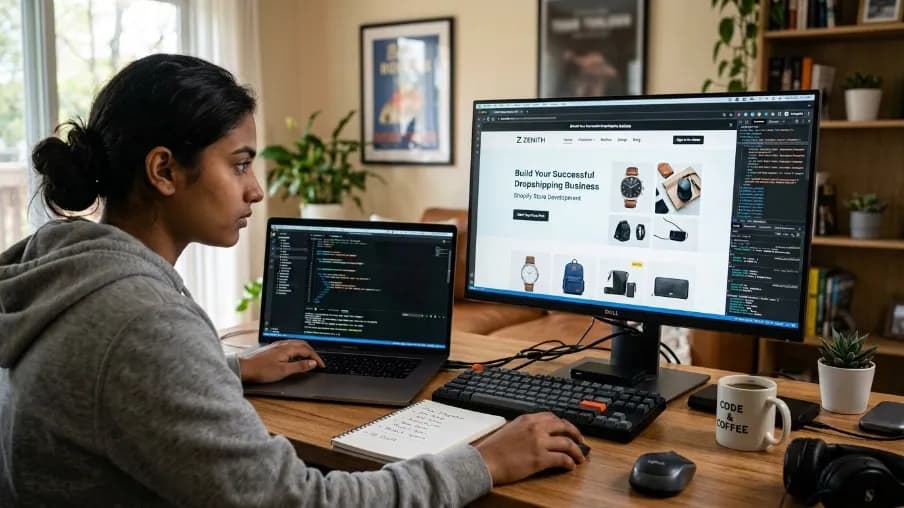
UX and UI design

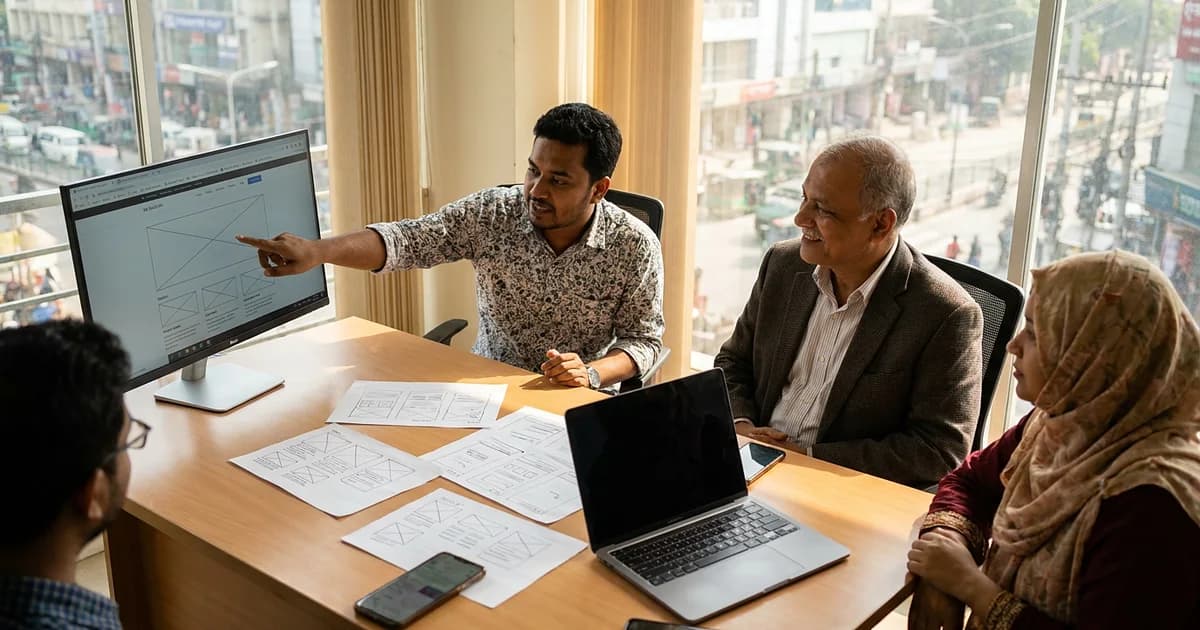
Wireframes settle where each element sits before colour is added, so layout problems are solved while they are still cheap to change. The visual design then applies your brand to every key page.

  • Wireframes for key pages
  • Phone and desktop layouts
  • Brand colours and typography
  • Clear calls to action
  • Readable contrast and text sizes
You receive
Design files for each page template, approved by you before development begins.
How we measure it
Your sign-off on each template, and colour contrast that meets WCAG 2.2 level AA.

Front-end development

Approved designs become code that adapts to any screen, from a small Android phone to a wide office monitor. The markup is structured so that search engines and screen readers can follow it.

  • Responsive layouts
  • Semantic HTML and heading order
  • Clean URLs and meta tags
  • Structured data (schema)
  • XML sitemap
  • Forms with spam protection
You receive
A working site on a private staging link that you can open on your own phone.
How we measure it
Built pages match the approved designs at phone, tablet and desktop widths.

Back end, CMS and admin panel

An admin panel lets your team change text, images, products and pages without waiting for a developer. Where the site needs logins, bookings or stored data, we build the database and server logic behind it.

  • Content management system
  • User roles and permissions
  • Database design
  • Booking, listing or member features
  • Links to CRM, ERP or email tools
You receive
An admin panel set up for your content, and a handover session for the staff who will use it.
How we measure it
Your staff can publish a page or edit a product on their own after handover.

Ecommerce and local payments

As an ecommerce website development company in Bangladesh, we build stores around how people here buy: on a phone, paying by mobile wallet, card or cash on delivery. Orders, stock and deliveries are run from one dashboard.

  • bKash, Nagad and SSLCommerz
  • Cash on delivery
  • Courier booking and tracking
  • Product variants and stock levels
  • Coupons and order notifications
  • Card payments for buyers abroad
You receive
A store with every payment method tested in sandbox mode and with small live orders before launch.
How we measure it
A successful test payment through each gateway, and checkout completion rate tracked in analytics.

Performance and Core Web Vitals

Speed is set as a target at the start rather than checked at the end. Images, code and server settings are tuned so pages open quickly on a mid-range phone over mobile data.

  • Compressed, correctly sized images
  • Caching and a content delivery network
  • Few third-party scripts
  • Lazy loading below the fold
  • Fonts that load without layout shift
You receive
A speed report for the key pages from Google PageSpeed Insights, taken at launch.
How we measure it
Google's Core Web Vitals targets: LCP within 2.5 seconds, INP within 200 milliseconds, CLS below 0.1.

Testing and security

Every page, form and payment flow is checked on real devices and the main browsers before anyone outside sees the site. Security basics are set up from day one to protect the site and the data it collects.

  • Phone, tablet and desktop checks
  • Chrome, Safari, Firefox and Edge
  • Form and checkout tests
  • HTTPS and security headers
  • Login protection against brute force
  • Automatic backups
You receive
A test log listing each issue found and how it was fixed.
How we measure it
No open critical issues on the launch checklist.

Launch and maintenance

Launch covers the domain, hosting and tracking, so the site is measurable from its first visitor. Afterwards, updates and fixes keep it secure, and new features can be added as the business grows.

  • Domain and DNS setup
  • Google Analytics and Search Console
  • Software and security updates
  • Uptime monitoring
  • Small changes and new features
You receive
A live site connected to Analytics and Search Console, with a maintenance plan if you want one.
How we measure it
Uptime, page speed and Search Console errors, reviewed each month on a maintenance plan.

From first call to launch: the usual build process

Each phase ends with something you look at and approve, so a wrong turn is caught early. This is the usual order of work for a business website.

  1. Week 1

    Discovery and scope

    We agree the goals, pages and features, and gather what you already have.

    • Kick-off call
    • You share brand files and current logins
    • Sitemap and feature list drafted
    • Scope signed off by both sides
  2. Weeks 2 to 3

    Wireframes and design

    Layouts come first, then the full visual design. You review and approve the designs before development starts.

    • Wireframes of key pages
    • Visual design for phone and desktop
    • Changes made from your feedback
    • Final design approval
  3. Weeks 3 to 6

    Development

    Pages, the admin panel and integrations are built on a staging site that you can visit while work is in progress.

    • Front end coded from the designs
    • Admin panel configured
    • Payments and other integrations connected
    • Progress reviews on the staging link
  4. Weeks 6 to 7

    Content and testing

    Final text and images go in, and the whole site is checked end to end.

    • Content and images loaded
    • Device, browser and speed checks
    • Issues fixed and retested
    • Your final walk-through
  5. Launch week

    Go-live and handover

    The site moves to your domain, and the first days are watched closely for anything real visitors run into.

    • Go-live on your domain
    • Tracking confirmed working
    • Sitemap submitted to Search Console
    • Maintenance begins if chosen

These durations are typical for a business website and depend on scope. An online store or web application needs a longer development phase, and the dates in your own plan are set once the scope is agreed.

Which type of website do you need?

Most projects that reach a web development company in Bangladesh fit one of these five types. If you are not sure which one is yours, the discovery stage settles it before any price is fixed.

TypeSuitsWhat is includedTypical timeline
Business or corporate websiteService firms, manufacturers, consultancies and organisations that need to be found and trustedHome, about, services, team and contact pages, enquiry forms, editable CMS, search basicsUsually 3 to 6 weeks
Ecommerce storeBrands, retailers and distributors selling online in Bangladesh or abroadCatalogue, cart and checkout, local and card payments, courier links, order and stock adminUsually 6 to 12 weeks
Web application or portalBusinesses that need logins, bookings, listings or internal workflowsUser roles, dashboards, database, reports, connections to other systemsUsually 2 to 6 months
Landing pageAd campaigns, product launches and eventsOne focused page, lead form, tracking for ads and analyticsUsually 1 to 2 weeks
Website redesignSites that are slow, dated, hard to edit or not bringing in enquiriesReview of the current site, new design, content moved across, old URLs redirectedUsually 4 to 8 weeks

These ranges are typical, not guaranteed. Projects that combine two types, such as a corporate site with a store, take longer.

Website development for your industry

Visitors in each sector come to a website for different things, so the pages and features that matter change with them.

Read the ecommerce guide

Ecommerce and retail

Shoppers compare products on a phone and give up on a long checkout. Stores are planned around product variants, stock that matches your shop shelves, and as few checkout steps as possible.

Read the B2B ecommerce guide

Wholesale and B2B suppliers

Trade buyers order in bulk, often on credit and at prices agreed only with them. A B2B site needs customer-specific price lists, minimum order quantities and quote requests in place of a plain cart.

Healthcare and clinics

Patients look for a doctor, a department and a free time slot. A page for each specialist and an appointment request form take pressure off the front desk phone.

Real estate

Buyers filter by area, size and price before they make contact. Project pages with floor plans, maps and a listing search keep that enquiry on your own site instead of a property portal.

Education and training

Students and parents look for admission dates, fees, notices and results. Online admission forms with document upload and a notice board the office can update put all of that in one place.

Manufacturers and exporters

Buyers abroad want evidence of capacity and compliance before they arrange a visit. Product ranges, factory details and certificates on a fast English site give them that evidence early.

Pricing starts from à§³30,000

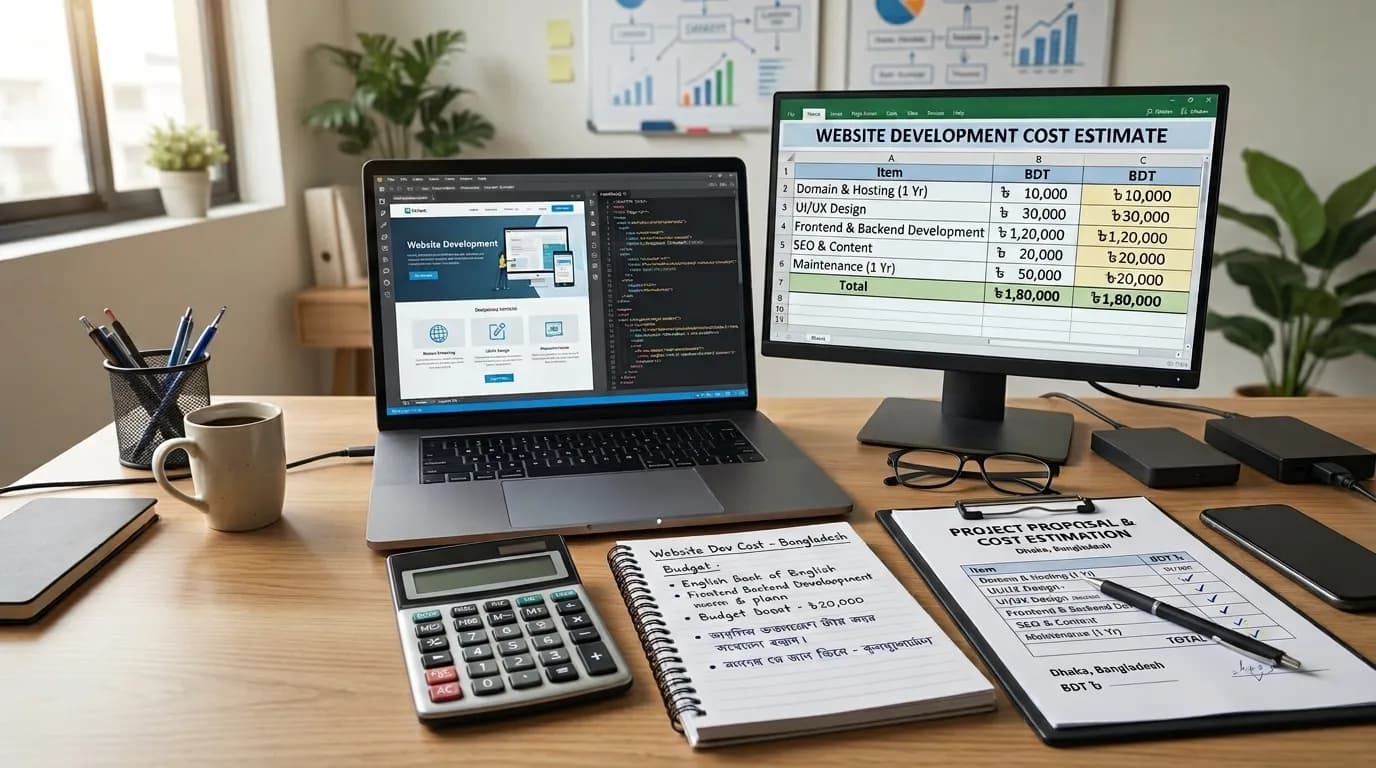
Websites start from à§³30,000. Each quote is based on a written scope listing the pages, features and integrations, so you can see exactly what the price covers.

What affects the cost

  • The number of pages and page templates
  • A custom design or an adapted theme
  • Ecommerce features, payment gateways and courier links
  • Logins, dashboards and other custom functions
  • Content writing in English, Bangla or both
  • Maintenance and support after launch
Get a quote for your project

Website Development guides

Frequently asked questions

Which is the best website development company in Bangladesh?

There is no single best one for every project. The right website development company in Bangladesh for you understands what the site has to do for your business, shows you comparable work, and explains its process in plain words. CyberCraft Bangladesh is based in Dhaka and works with clients in Bangladesh and abroad, and we are happy to be compared side by side with any other company you are considering.

Are you also an ecommerce website development company in Bangladesh?

Yes. Online stores are part of the same service, from a small catalogue to a large multi-category shop. Whether your store is custom built or runs on an off-the-shelf platform is decided with you during discovery, based on catalogue size, budget and who will manage it day to day.

Who owns the code, domain and hosting after launch?

You do. The domain and hosting are registered in your company's name, or we use accounts you already hold, and the source code and every admin login are handed to you at launch. You are free to move the site to another developer or host whenever you choose.

Can you take over a website another developer built?

Usually, yes. We first review the code, the hosting and the access you have, then tell you whether the site is worth maintaining, needs repairs, or would cost less to rebuild.

Can my website be in Bangla, English or both?

Any of the three. A Bangla version needs fonts that display correctly on every phone and menus that work in both languages, so we plan it at the design stage instead of adding it later.

Does a new website include SEO?

A new site gives search engines a clean starting point, but rankings come from months of content and links afterwards. That ongoing work is a separate SEO service. CyberCraft Bangladesh also offers software and ERP development and AI automation if your website needs to connect to them.

Do I need a website if I already sell on Facebook?

A Facebook page is a good place to talk to customers, but you control neither its reach nor its rules, and orders taken in Messenger are copied by hand. A website records every order and builds a customer list that belongs to you. Most sellers keep both and send page visitors to the website.

What do you need from me to get started?

A short description of your business, the website you have now if any, and two or three sites you like. Late content and slow feedback delay projects more than anything else, so it helps to name one person who can approve decisions.

Do you work with clients outside Bangladesh?

Yes. Calls, design reviews and progress checks all happen online, and the site can be built for buyers in any country, with content and payments set up for buyers there.

Tell us about your project

Share what you need and we will reply with a free quote within 24 hours.

Share: