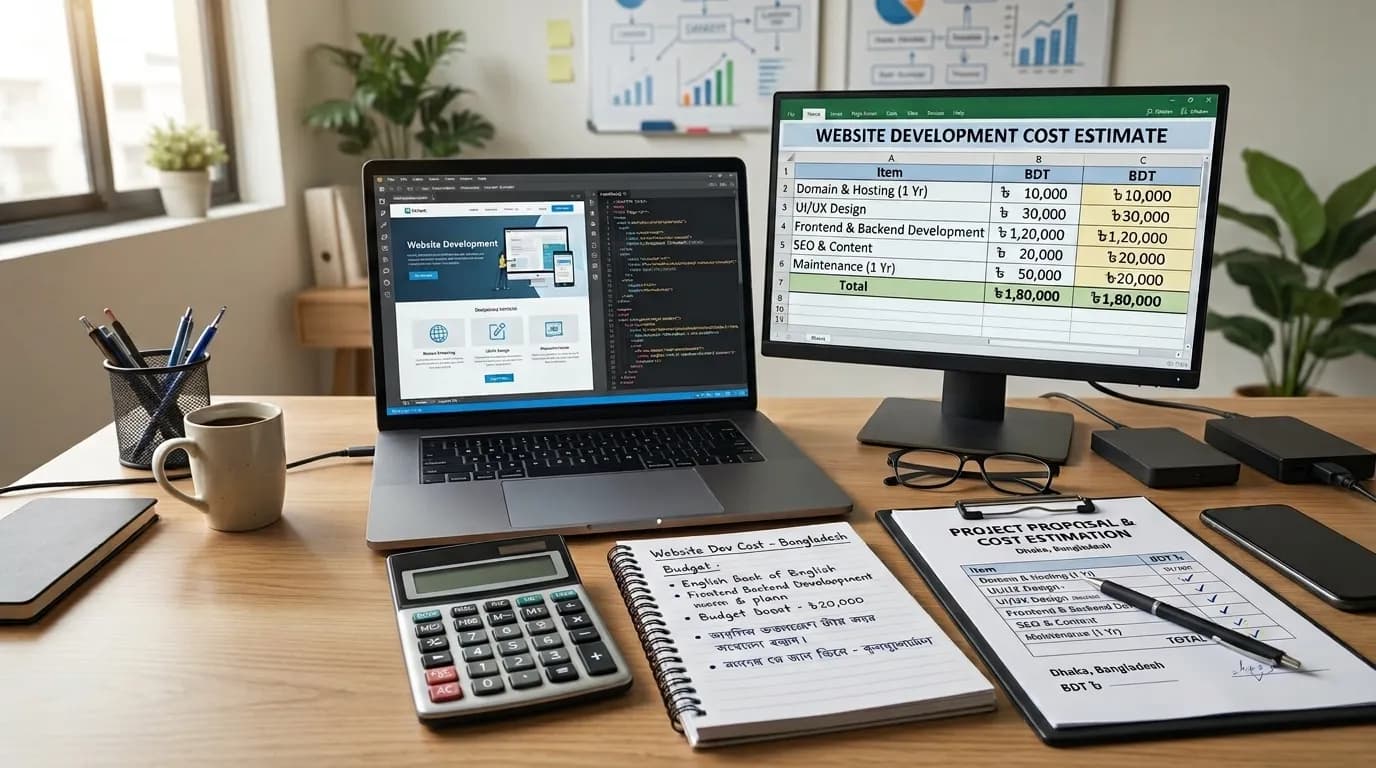
B2B Ecommerce Website Development: Complete Guide to Building a Store That Actually Sells

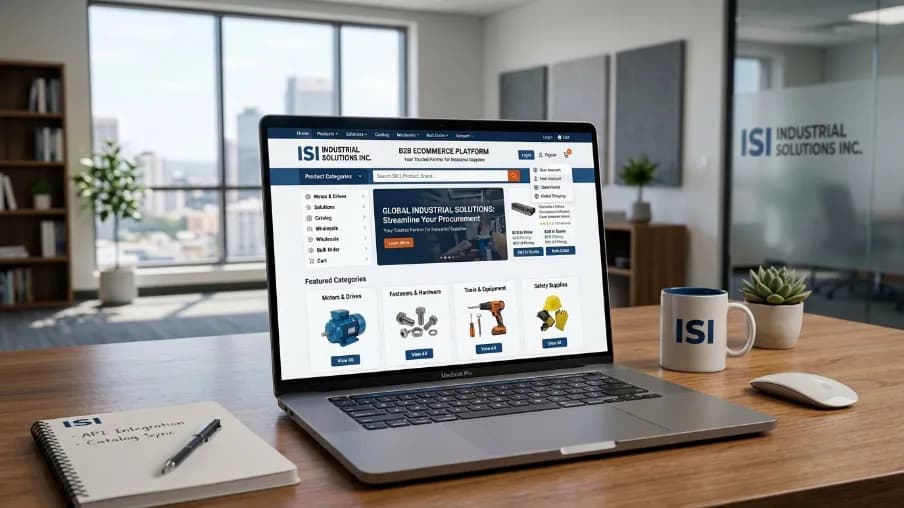
Let me ask you something. When was the last time one of your biggest clients called you just to place an order?
If you're like most wholesalers, manufacturers, and distributors I talk to, the answer is "not in a while." Your buyers don't want to call. They don't want to email a PDF price list either. They want to log in, see their own prices, reorder in two clicks, and get back to their day.
That's the whole story behind B2B ecommerce website development. It's not a trend. It's how business buying works now.
I've spent time in the trenches of this space, and I want to walk you through everything you need to know before you build, rebuild, or upgrade your B2B store. No jargon. No fluff. Just what works.
By the end of this article, you'll know:
- What makes B2B ecommerce platform development different from a normal online store
- Why the market is growing so fast (and what it means for you)
- The features your portal actually needs
- Which platform fits your business
- What integrations you can't skip
- What it really costs
- How to hire the right B2B ecommerce development company
Let's get into it.
What Is B2B Ecommerce Website Development
B2B ecommerce website development is the process of building an online store designed for business buyers, not casual shoppers. Think wholesale buyers, procurement teams, and repeat customers who order in bulk.
A B2C store sells one pair of shoes to one person. A B2B store sells 500 units of the same product to a buyer who has a contract price, a credit line, and a purchasing manager who needs approval before checkout.
That's a completely different job. The website has to handle:
- Custom pricing per account
- Bulk ordering and quick reorder
- Multiple users under one company account
- Purchase approval workflows
- Net payment terms, not just credit cards
A regular Shopify template can't do this out of the box. That's why custom B2B ecommerce solutions exist, to solve problems a normal store was never built for.
B2B Ecommerce Market Is Growing Faster Than Almost Anyone Expected
I want you to sit with this number for a second.
The <cite index="6-1">global B2B ecommerce market was valued at $24.1 trillion in 2025 and is projected to grow to $28.0 trillion in 2026</cite>. Some forecasts put the number even higher, with one report pointing to a market approaching $36 trillion by 2026 when you count the full trade ecosystem.
Here's what really caught my eye. <cite index="3-1">The average B2B company now pulls 82% of its revenue from remote, not in-person, sales</cite>. Your buyers stopped needing a sales rep in the room to say yes.
And this shift isn't a Western thing only. <cite index="6-1">Asia Pacific holds the largest share of the global B2B ecommerce market, at 39.5% of revenue in 2025</cite>, led by manufacturing and distribution.
Marketplaces are eating into direct sales too. <cite index="5-1">As of 2024, 59% of B2B buyers complete more than a quarter of their purchases on marketplaces</cite>, a huge jump from just a few years back.
What does all this mean for you? Simple. If your competitors haven't already moved online, they're about to. The businesses that build a strong B2B ecommerce website now will own the buyer relationship. The ones that wait will watch buyers go to Amazon Business or a competitor's portal instead.
Signs Your Business Needs Custom B2B Ecommerce Solutions
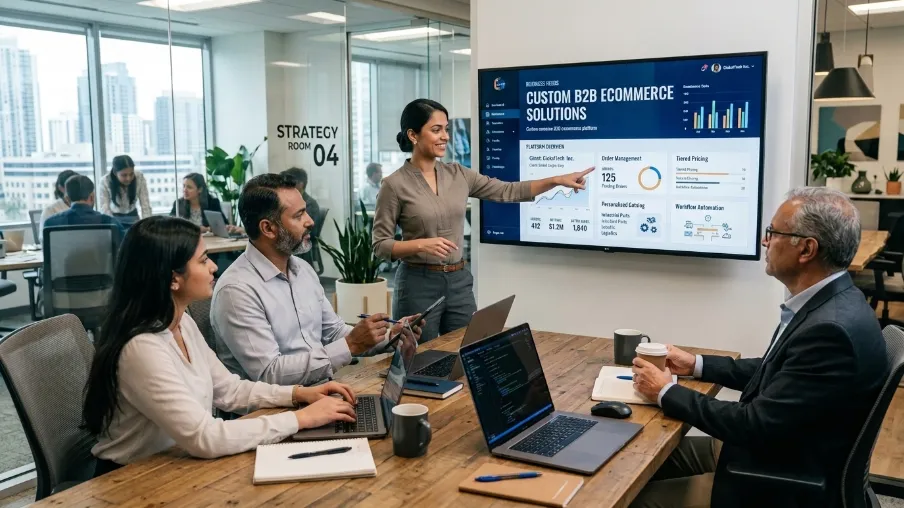
You don't need to guess whether it's time. Here are the honest signs I look for.
Your Sales Team Is Buried in Repeat Orders
If your reps spend half their day re-entering the same purchase order for the same client, that's not sales work. That's data entry. A B2B ecommerce portal development project gives buyers a "reorder" button and gives your team their time back.
Every Client Gets a Different Price, and It's a Mess
Spreadsheets and email threads don't scale. A proper platform stores tiered pricing per account and shows each buyer only their price.
You're Losing Deals to Faster Competitors
Buyers compare experiences, not just prices. If a rival's site lets a buyer check stock and order in five minutes, and yours needs a phone call, you lose that deal even if your product is better.
You Want to Reach New Markets Without Hiring More Reps
A well-built B2B ecommerce web design company can build you a self-serve storefront that sells to five new regions without you hiring a single new salesperson.
If any of this sounds familiar, it's time.
Must-Have Features in B2B Ecommerce Portal Development
Not every store needs every feature. But most solid B2B builds include these.
Account-Based Pricing and Catalogs
Each business account should see its own prices, its own approved product list, and its own minimum order quantities. Nothing generic.
Bulk Ordering and Quick Reorder
Buyers should be able to upload a CSV of SKUs, or click "reorder last purchase," instead of adding items one by one.
Multi-User Company Accounts
A buyer's company might have five people who can place orders and one person who approves them. Your platform needs role-based logins to match how real companies buy.
Custom Quote Requests
Big orders often need negotiation. A "request a quote" button that routes straight to your sales team keeps big deals moving without losing them to email.
Flexible Payment Options
Net 30, net 60, purchase orders, ACH, wire transfer, B2B buyers expect terms, not just a credit card field.
Self-Service Account Management
Order history, invoices, tracking, and reordering should all live in one dashboard. Buyers hate calling support for things they could do themselves in ten seconds.
Mobile-Friendly Ordering
More procurement managers are ordering from their phones between meetings. B2B ecommerce mobile app development or a fully responsive site isn't optional anymore, it's expected.
Choosing the Right Platform for B2B Ecommerce Web Development
This is where most projects go sideways. People pick a platform because they've heard of it, not because it fits their business. Here's how I'd think about it.
Shopify Plus B2B Development
Shopify Plus has a solid native B2B mode now. It's a strong pick if you want fast setup, clean design, and you don't need extremely deep, custom workflows. Great for mid-size wholesalers who also sell some B2C.
Magento (Adobe Commerce) B2B Ecommerce Development
Magento B2B ecommerce development is still the heavyweight choice for complex catalogs, multi-brand businesses, and companies that need deep customization. It costs more to build and maintain, but it bends to almost any workflow you throw at it.
WooCommerce B2B Store Development
If you're already on WordPress and your catalog isn't massive, WooCommerce B2B store development is a budget-friendly way to add wholesale features without a full platform switch.
BigCommerce B2B Development
BigCommerce sits in a nice middle ground. Good native B2B tools, solid API access, and lower long-term costs than Magento for mid-market brands.
Headless Commerce for B2B
Headless commerce for B2B separates your frontend from your backend. It's the right call if you want a highly custom buyer experience, need to publish to multiple channels (web, app, marketplace), or plan to scale fast. It costs more upfront but gives you room to grow without rebuilding later.
There's no single "best" platform. There's only the best platform for your catalog size, your budget, and how custom your buying process needs to be. A good B2B ecommerce development company will tell you this honestly instead of pushing whatever they're used to building.
Shopify vs Custom Ecommerce Development: Which One Fits You
I hear this question in almost every discovery call, so let's settle it.
Shopify vs custom ecommerce development isn't really a fight. It's a fit question. If your pricing rules, catalog, and checkout are fairly standard, Shopify (or Shopify Plus for B2B) gets you live fast, at a lower cost, with less risk. If your business runs on complex approval chains, ERP-driven pricing, or a huge multi-brand catalog, custom ecommerce development gives you room that a template simply can't.
Here's how I'd break down the other common debates:
Magento vs Shopify: Magento (Adobe Commerce) wins when you need deep customization, complex B2B catalogs, or multi-store setups from one backend. Shopify wins when you want speed, lower maintenance, and a smoother learning curve for your team. Most mid-size wholesalers I talk to lean Shopify Plus unless their catalog is genuinely massive or highly specialized.
Shopify or WooCommerce: WooCommerce is the better pick if you're already comfortable with WordPress and want lower upfront costs. Shopify is the better pick if you want a fully hosted platform with less technical upkeep. Neither is "wrong," it's about how much control you want versus how much you want handled for you.
If you're just starting an online store for the first time, I'd almost always point you toward Shopify or WooCommerce first. Get live, get real orders, learn what your buyers actually need. Then, once you outgrow the template, that's when custom or headless development earns its cost.
E-commerce Website Development Process, Step by Step
Whatever platform you choose, a solid e-commerce website development process usually looks like this:
- Discovery, mapping your catalog, pricing rules, and buyer types
- Platform selection, choosing Shopify, Magento, WooCommerce, BigCommerce, or headless based on your needs
- Design, building a storefront that matches how your buyers actually shop
- Development, building the store, integrations, and custom features
- Testing, checking pricing logic, checkout, and integrations before launch
- Launch, going live, usually in phases for bigger catalogs
- Support, ongoing updates, fixes, and new features as your business grows
Skipping discovery is the number one mistake I see. Teams jump straight to design and development, then realize halfway through that their pricing logic doesn't fit the platform they picked.
B2B Ecommerce Integration Services You Can't Skip
Your website doesn't run alone. It has to talk to the rest of your business.
ERP Integration for B2B Ecommerce
Your inventory, pricing, and order data probably already live in an ERP like SAP, NetSuite, or Odoo. ERP integration for B2B ecommerce keeps your website in sync with real stock levels, so you never sell what you don't have.
B2B Customer Portal and CRM Integration
B2B ecommerce CRM integration connects every order and quote request straight into your sales team's CRM. No more manually copying leads from a contact form.
Payment Gateway Integration
B2B ecommerce payment gateway integration needs to support more than Visa and Mastercard. Think ACH transfers, purchase orders, and invoiced net terms, all tracked automatically.
Order Management System
A B2B ecommerce order management system ties orders, shipping, returns, and invoicing together in one place, so nothing falls through the cracks between departments.
B2C to B2B Ecommerce Migration
If you're moving from a consumer-style store to a proper wholesale platform, B2C to B2B ecommerce migration needs careful planning. You're not just adding features, you're changing how the whole checkout and account system works.
How Much Does B2B Ecommerce Website Development Cost
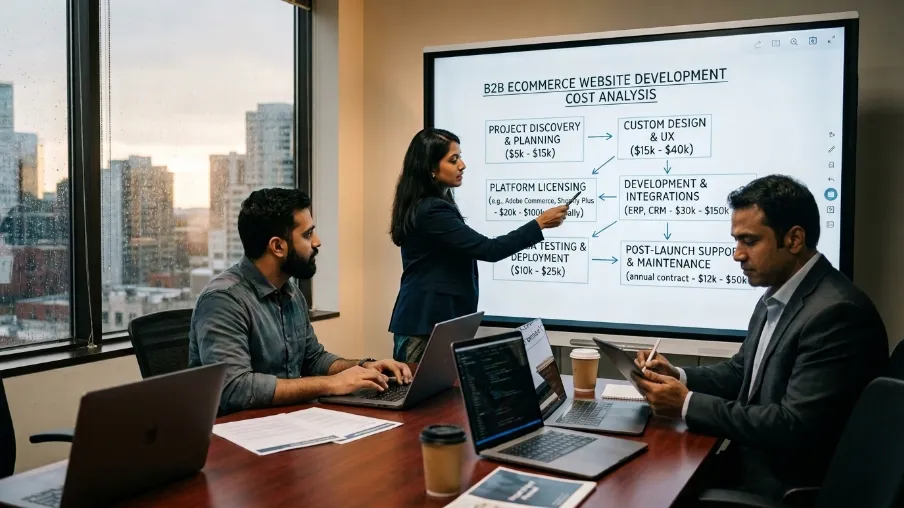
I get this question in almost every first call, so let's be straight about it.
Simple B2B store on Shopify Plus or WooCommerce: roughly $15,000–$40,000 Mid-size custom build on BigCommerce or Magento: roughly $40,000–$120,000 Complex, fully custom, or headless commerce build: $120,000 and up
The real cost drivers are usually:
- How many ERP or CRM integrations you need
- How complex your pricing rules are
- Whether you need a custom mobile app
- How many products and variants are in your catalog
- How much custom design versus template work you want
Cheap builds usually mean template limitations later. I'd rather you spend a bit more upfront on the right architecture than pay double in six months to fix a platform that can't scale.
If you're searching for affordable e-commerce website development, that doesn't have to mean "cheap and limited." It usually means starting on Shopify, WooCommerce, or BigCommerce with just the B2B features you need now, then adding integrations and custom work as your order volume grows. That's a smart, affordable path, not a compromise.
How to Hire the Right B2B Ecommerce Website Development Company
Here's my honest advice on choosing a partner.
Ask to see real B2B work, not just B2C stores. A pretty consumer store tells you nothing about whether they understand tiered pricing or approval workflows.
Ask how they handle ERP integration. If they hesitate or get vague, that's a red flag. This is core to B2B, not an add-on.
Ask about post-launch support. Your store will need updates, bug fixes, and new features long after launch. Make sure support is part of the deal, not a separate scramble later.
Ask for a realistic timeline. A believable custom build usually takes 8 to 20 weeks depending on complexity. If someone promises you a full custom platform in two weeks, be careful.
At CyberCraft Bangladesh, this is exactly the kind of work we do daily, B2B ecommerce website development that's built around your actual buyers, your actual catalog, and your actual sales process, not a generic template.
Ready to Build a B2B Store Your Buyers Actually Want to Use
Here's the truth. Your buyers already expect a self-serve, fast, and personal ordering experience. If you don't build it, someone else will, and they'll take the order instead of you.
I'd love to walk you through what a custom B2B ecommerce website could look like for your catalog, your pricing, and your sales team. Reach out to CyberCraft Bangladesh and let's map out a platform built around how your business actually sells.
Frequently Asked Questions About B2B Ecommerce Website Development
What's the difference between B2B and B2C ecommerce website development?
B2B sites are built for business buyers with account-based pricing, bulk ordering, approval workflows, and payment terms. B2C sites are built for single, one-time consumer purchases with simple checkout.
How long does B2B ecommerce website development take?
Most custom projects take 8 to 20 weeks, depending on how many integrations, custom features, and catalog items are involved.
Which platform is best for B2B ecommerce?
It depends on your catalog size and how custom your workflows need to be. Shopify Plus and BigCommerce suit mid-size brands wanting speed. Magento and headless commerce suit larger, more complex catalogs.
Do I need a custom B2B ecommerce solution, or can I use a template?
If your pricing, catalog, or ordering rules are simple, a template platform with B2B features may work fine. If you have account-specific pricing, approval chains, or ERP data, custom development pays off fast.
Can I migrate my existing B2C store into a B2B ecommerce portal?
Yes. B2C to B2B ecommerce migration is common, but it needs proper planning around account structure, pricing logic, and checkout flow so you don't disrupt existing customers.

I’m Mitu Das, a JavaScript developer, ERP product architect, and SEO specialist from Bangladesh. I work at CyberCraft Bangladesh, where I help build simple, scalable software, SaaS platforms, and business solutions. My goal is to create technology that helps companies save time, automate daily tasks, and grow faster. I enjoy combining development, product ideas, and SEO strategies to create useful digital solutions for modern businesses.
Writes about