
How to Rebrand a Business Without Losing Customers: A Step-by-Step Guide 2026


How to rebrand a business without losing customers means updating your business identity while keeping the trust and recognition your existing customers already have. This step-by-step guide explains how to research customer expectations. It also covers how to preserve familiar brand elements, communicate the change clearly, protect your SEO, and introduce the new identity slowly.
About the Author
Written by: Mitu Das, SEO Specialist and Web Developer. I have worked in SEO and content writing since 2024. My focus is technical SEO, content strategy, website performance, and search-friendly web development. This work is directly useful for the digital side of rebranding. That includes website structure, URL changes, redirects, metadata, internal linking, and search visibility. I combine SEO and web development to create practical solutions. My goal is to help businesses strengthen their online presence.
Areas of expertise (knowsAbout): SEO, AEO, PPC, Content Writing, Content Strategy, Technical SEO, Keyword Research, Digital Marketing, Custom ERP, Website Design & Development, On Page SEO, Off Page SEO, Brand Identity Design, Rebranding Strategy, Website Migration & 301 Redirect Mapping, and Trademark-to-Domain Transition Planning.
Credentials & certifications: Google Analytics (GA4) Certified, HubSpot Content Marketing Certified, and Google Search Central "Site Moves and Migrations" completion. These sit alongside my day-to-day technical SEO work. That work is where most of my rebranding experience comes from. I don't design logos. Instead, I am usually the person who maps the old URL structure to the new one. This way, a rebrand doesn't quietly erase a business's search visibility on launch day.
Selected publications: this guide is one of a small series I've written on technical-SEO-adjacent business change. For example, I've also written pieces on domain migrations without losing rankings and on 301 redirect mapping for small business websites. Both are published on the CyberCraft Bangladesh blog.
Reviewed by: Senior Content Strategist at CyberCraft Bangladesh. Our review process checks technical accuracy, search intent, SEO best practices, and practical usefulness. Editorial review was completed and last verified on September 22, 2026, alongside the most recent content update. This follows CyberCraft Bangladesh's internal editorial policy for YMYL-adjacent business advice. That policy requires a named reviewer, a documented review date, and a check against primary sources. Those sources include the USPTO, Google Search Central, and the original research reports cited below.
Published: July 12, 2026, Last Updated: September 22, 2026
I wrote this guide to explain how businesses can update their brand identity while keeping customer recognition, trust, and search visibility. It covers customer research, familiar brand elements, rebranding communication, gradual rollout, technical SEO migration, and common rebranding mistakes. Throughout, I rely on published industry research and practical SEO knowledge.
Key Takeaways
Don't start with the logo. Instead, start with a one-sentence reason for rebranding: strategy first, design second.
Talk to existing customers before changing anything. This step, done before design work begins, is the most commonly skipped and the most protective part of any rebranding strategy for small business owners in particular, who rely more heavily on repeat, personal relationships.
Keep one familiar anchor. For example, Amazon kept its smile icon through a full tone and typography update, and Dunkin' Donuts kept its pink-and-orange color scheme and font when it shortened its name to just "Dunkin'."
Treat a name or URL change as a technical SEO migration, using 301 redirects mapped page-by-page, not just a cosmetic update.
82% of marketers have worked on a rebranding project, according to research from Bynder, and roughly 3 in 4 S&P 100 companies rebrand within their first seven years, so this is a normal, common part of the business rebranding process, not a rare gamble.
A sudden, unexplained change is what tends to trigger backlash, not change itself. Tropicana's 2009 packaging redesign was reversed within about two months after negative customer reaction, and it's the case that best illustrates why how to rebrand a business without losing customers depends so heavily on sequence.
What Rebranding Really Means
A rebrand is more than a new logo. It's a shift in how your business looks, sounds, and feels to the world. Specifically, rebranding a business means strategically updating your identity, including your name, visuals, positioning, and messaging, so it reflects who you are today, while still holding onto the customers who already trust you.
Here's why customers get nervous: recognition is part of trust. When someone sees your name or packaging, they rely on familiar cues to know they're in the right place. Change those cues too quickly, and people feel a small jolt of uncertainty, even when the change is positive. That's why understanding how to rebrand a business without losing customers requires more than simply changing your brand's appearance. It means preserving the familiar elements that customers already trust while introducing the changes your business needs.
Two terms explain this distinction:
Brand identity: what you control, meaning logo, colors, name, and voice.
Brand image: what the customer actually carries in their head, built from every past interaction.
A rebrand changes your identity on purpose. However, if done carelessly, it can damage your image by accident. That's the core idea this whole guide is built around.
What the Data Shows
Bynder's rebranding research found that 82% of marketers surveyed have worked on a rebranding project, and the average rebrand takes about seven months and touches over 200 brand assets.
Similarly, roughly three in four S&P 100 companies have rebranded within their first seven years of existence, per the same Bynder research.
Meanwhile, PwC's "Experience Is Everything" customer research, based on a survey of 15,000 consumers, found that roughly a third of shoppers say they'd walk away from a brand they love after a single bad experience, underlining why the rollout of a rebrand matters as much as the redesign.
As a result, the Tropicana 2009 packaging redesign caused a sharp, measurable sales decline within weeks of launch, forcing the company to revert to its original design within about two months. An academic analysis of retail sales data later estimated the redesign cost the brand tens of millions of dollars.
If your rebrand involves a name change, note that a trademark is tied to the exact name or logo you registered, not your business generally, so the USPTO's guidance on updating trademark ownership and name records is worth reviewing early in the process.
Do You Need to Rebrand? Check These Signs First
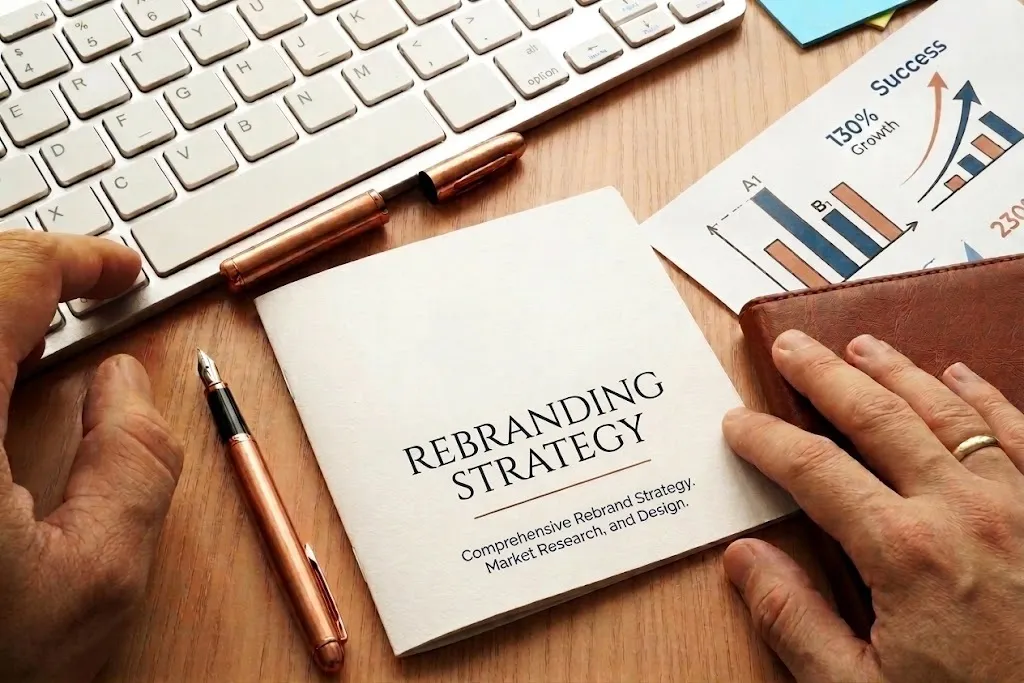
You may need to rebrand if your business has outgrown its identity, entered a new market, changed its services, or experienced a merger or reputation issue. However, not every business needs a complete rebrand. If your existing identity still represents your business accurately, a minor visual refresh may be sufficient. Evaluate your business goals, customer expectations, and current brand perception before deciding.
Not every business needs a full rebrand. Sometimes, a smaller refresh is the right approach, especially when rebranding a small business, where the cost and risk of a complete overhaul can be more significant. If you're researching how to rebrand a business without losing customers, start by identifying whether your business needs a minor refresh or a complete rebrand. Ask yourself these questions to determine which approach makes the most sense for your business.
Has your business changed more than your brand has? If you started as a local shop and now serve customers nationwide, your old name or visuals might not fit anymore.
Are you entering a new market or audience? Expanding into a new industry, region, or customer group often calls for a brand evolution.
Did a merger or reputation issue force your hand? This is one of the more complex scenarios, since you're managing two histories at once.
Does your brand look outdated next to competitors? Design trends shift, and a logo built ten years ago can look tired next to sharper newer competitors, even when the product itself is just as good.
If two or more of these apply, you're a real candidate for a full rebrand rather than a refresh. If none apply, a lighter visual update is the safer, cheaper choice.
What Actually Happened When Real Brands Rebranded
Tropicana's 2009 Packaging Redesign (What Not to Do)
Problem: Tropicana replaced the packaging for its best-selling Pure Premium orange juice, a product generating over $700 million a year, with an entirely new design in January 2009. The familiar orange-with-a-straw imagery was dropped in favor of a plain glass of juice.
Approach: The redesign launched nationally all at once, with no pilot phase, no customer research beforehand, and no advance communication explaining the change.
Results: Within about two months, sales had dropped roughly 20%, and the company reverted to its original packaging. Academic analysis of the sales data later put the cost of the misstep in the tens of millions of dollars.
Lesson learned: Removing a highly recognizable visual anchor all at once, with no explanation and no testing, gives customers no way to recognize the product on the shelf, let alone understand why it changed.
Dunkin' Donuts to Dunkin' (What to Do Instead)
Problem: Dunkin' Donuts wanted to reposition itself as a beverage-led brand rather than a donut shop, without confusing or alienating nearly 70 years of loyal customers.
Approach: The company tested the shortened name "Dunkin'" at a small number of stores starting in 2017 before rolling it out nationally in 2018 to 2019. Crucially, it kept its familiar pink-and-orange color palette and its original 1973 font throughout the change, and publicly reassured customers that its donuts weren't going anywhere.
Results: The rebrand rolled out smoothly at scale, with the company explicitly framing the shortened name as a recognition of what customers already called it, rather than a break from its past.
Lesson learned: Testing a change on a small scale first, keeping a strong visual anchor, and communicating the reason clearly all reduce the risk that a real strategic shift gets mistaken for the business itself changing. This is exactly how to keep customers during rebranding: give them something familiar to hold onto while everything else evolves.
How to Rebrand a Business Without Losing Customers: 7 Steps
Drawing on how these real rebrands played out, along with established industry guidance, here's the sequence that consistently appears across successful rollouts and forms the backbone of a solid rebranding strategy for small business owners and larger companies alike. It offers a practical, step-by-step approach to how to rebrand a business without losing customers while maintaining brand recognition, customer trust, and long-term loyalty.
Get clear on your "why" before anything else. Write your reason for rebranding in one sentence. If you can't explain it simply, customers won't understand it either. The most common mistake companies make is prioritizing looks over strategy.
Then, research your current customers before you change a thing. This step gets skipped more than any other, and it's the one that protects you most. Ask what they value today and what confuses them; this tells you what to protect, not what to remove.
Next, keep an anchor point customers can hold onto. Amazon kept its smile icon through a tone and typography update; Dunkin' kept its color palette and font through a full name change. That thread keeps loyal customers feeling like they still know you.
Build the new identity with intention. Logo, palette, typography, and voice should work as one documented system, not scattered pieces, with guidelines your whole team can follow.
Protect your SEO and digital footprint. This is the part I'd flag most from a technical standpoint: map every page to its new URL using 301 redirects, a server instruction that tells search engines a page has permanently moved, so rankings and traffic transfer instead of resetting. Keep an "About" page naming both your old and new business name so search engines and customers understand the two are the same trusted business. If your business name is changing, also plan to update your trademark registration, since it doesn't transfer automatically.
Plan the announcement like a campaign. Tropicana's experience shows what happens when this step is skipped: most rebrand backlash stems from a change that felt sudden or unexplained, rather than from the redesign itself.
Roll out gradually. Dunkin's approach of testing at a handful of stores before going national is a useful model: teasers, previews, and a limited pilot give customers time to adjust emotionally before the full reveal.
Follow these seven steps in order, and you have a repeatable business rebranding process for how to rebrand a business without losing customers, regardless of your industry or company size.
How to Announce a Rebrand to Customers
To understand how to rebrand a business without losing customers, start by explaining the reason for the change before introducing the new identity. Communicate through email, social media, your website, and other relevant channels. Highlight what is changing and reassure customers about what will remain the same, such as service quality, products, pricing, and team members. Consistent communication helps customers understand the transition and recognize your business.
Knowing how to announce a rebrand to customers is arguably the single highest-leverage skill in this entire process, since most of the damage from a poorly handled rebrand comes from the announcement, not the redesign itself.
Tell them before you show them. A short "something new is coming, and here's why" message builds anticipation instead of shock.
Then, explain the why, not just the what. Customers forgive change they understand and resist change that feels random.
Also, keep the message consistent across every channel: email, social media, your website banner, in-store signage. Mixed messages across channels erode trust in the change itself.
Above all, reassure them what isn't changing: service, team, quality, pricing. Dunkin' did this explicitly, publicly promising its donuts weren't disappearing even as the name changed.
Common Rebranding Mistakes to Avoid
Changing everything at once, with no announcement: Tropicana's 2009 redesign is the textbook example, a full packaging change with no lead-up and no explanation.
Skipping customer research: you can't protect what you haven't first understood.
Going silent during the transition: quiet rebrands invite rumors and confusion.
Ignoring your team: employees aren't just a channel to spread the news; if staff sound unsure, customers hear that uncertainty too.
Forgetting the technical side: broken links, renamed features, mismatched invoices, and un-updated trademark records damage trust more than any new logo could.
Rebranding without a real reason: a striking visual overhaul with no strategic rationale usually confuses more than it helps.
Business Rebranding Checklist for Small Business
Use this business rebranding checklist as your working reference for how to rebrand a business without losing customers, step by step:
Write your one-sentence reason for rebranding
Talk to at least a handful of loyal customers before you start
Decide which brand elements to keep as anchor points
Build a full brand identity system, not just a new logo
Audit your website, redirects, and SEO before launch
Draft your announcement message and timeline
Brief your team before the public sees anything
Update every channel at the same time, on launch day
Monitor customer feedback and search traffic for the first 90 days
Keep a "formerly known as" note on your site for a transition period
How Long Does It Take Customers to Adjust to a Rebrand?
Customers may need several weeks or longer to become familiar with a new brand identity. The adjustment period depends on how significantly the name, visuals, messaging, and customer experience change. Understanding how to rebrand a business without losing customers also means giving customers enough time to adapt. Bynder's research places the average rebranding project timeline at approximately seven months, although that measures project execution rather than customer adjustment. Monitor feedback, engagement, and search traffic after launch to understand how customers are responding.
Will Rebranding Hurt My Business?
How to rebrand a business without losing customers starts with maintaining recognition, trust, and easy access to your products or services. A poorly managed rollout may create confusion, weaken customer trust, or affect search visibility. Researching existing customers, retaining familiar brand elements, communicating the change clearly, and implementing technical SEO updates carefully can help reduce these risks.
Conclusion
Learning how to rebrand a business without losing customers is less about changing everything and more about managing change carefully. Start with a clear reason for the rebrand. Understand what existing customers value, and keep the familiar brand elements that support recognition. Communicate the changes before launch, explain what will stay the same, and introduce major updates gradually.
Don't overlook the technical side. If your rebrand includes a new business name, domain, or URL structure, plan redirects, update internal links, review indexing, and monitor organic traffic. At CyberCraft Bangladesh, we approach rebranding with both brand strategy and technical SEO in mind. This helps businesses protect the digital visibility they've already built, while introducing a refreshed identity.
In short, a thoughtful rebranding process can help your business evolve, while protecting customer trust, brand recognition, and search visibility.
Next step
If you're learning how to rebrand a business without losing customers, and your rebrand involves a name, domain, or URL change, the technical migration is critical. Redirects, indexing, and trademark records can affect search visibility. That's the part of this process I work on directly, so feel free to reach out if you want a second set of eyes on that side of your launch.
Frequently Asked Questions About How to Rebrand a Business Without Losing Customers
Is it safe to rebrand my business?
Rebranding can be managed with less disruption when you plan carefully and understand your existing customers. If you're learning how to rebrand a business without losing customers, research their expectations, identify the brand elements they recognize, and explain what is changing before launch. A gradual rollout, consistent communication, and monitoring customer feedback can help you identify confusion and address concerns during the transition.
How do I rebrand my business the right way?
Start by defining why your business needs a rebrand and researching your existing customers. Decide which familiar elements to retain, then develop a consistent identity system. Plan your announcement, update your website and technical SEO requirements, and introduce the changes gradually. Monitor customer feedback and search performance after launch so you can respond to problems.
What is the biggest mistake businesses make when rebranding?
One significant mistake is prioritizing visual changes over business strategy and customer expectations. Changing a recognizable identity without research, testing, or advance communication can confuse existing customers. Tropicana's 2009 packaging redesign illustrates the risks of removing familiar visual cues. Businesses should establish a clear reason for rebranding and explain the transition before introducing major changes.
Will a rebrand hurt my SEO rankings?
A rebrand does not automatically mean your website will lose search rankings. However, changing your domain, URLs, or business name without appropriate technical preparation can affect search visibility. Map old URLs to relevant new URLs, implement suitable redirects, update internal links, and monitor indexing and organic traffic. A careful migration helps search engines understand the changes.
How do I keep customers during rebranding?
Keep customers informed throughout the rebranding process. Explain why the change is happening, ask for feedback before launch, and retain familiar elements where appropriate. Reassure customers about important things that are staying the same, including product quality, service, and support. After launch, monitor questions and complaints so your team can address confusion promptly.
How do I rebrand a business without losing customers if I only have a small team?
A small business can follow the same core rebranding steps without needing a large marketing department. Learning how to rebrand a business without losing customers starts with understanding loyal customers, defining the reason for the change, and deciding which familiar elements to preserve. Prepare a simple communication plan, update essential digital assets, and introduce changes in manageable stages. Monitor feedback and prioritize issues that directly affect customer trust.
References
PPAI (summarizing PwC's "Experience Is Everything"), Customer Experience Research Findings
CTV News (citing CNN/Circana data), Tropicana Fans Are Ditching the Brand After a Bottle Redesign
AgEcon Search, University of Minnesota, Academic Study on the Sales Impact of the Tropicana Redesign
Nation's Restaurant News, The Name Is Dunkin', Just Dunkin'
Google Search Central, Change of Address Tool and Site Move Guidance

I’m Mitu Das, a JavaScript developer, ERP product architect, and SEO specialist from Bangladesh. I work at CyberCraft Bangladesh, where I help build simple, scalable software, SaaS platforms, and business solutions. My goal is to create technology that helps companies save time, automate daily tasks, and grow faster. I enjoy combining development, product ideas, and SEO strategies to create useful digital solutions for modern businesses.
Writes about