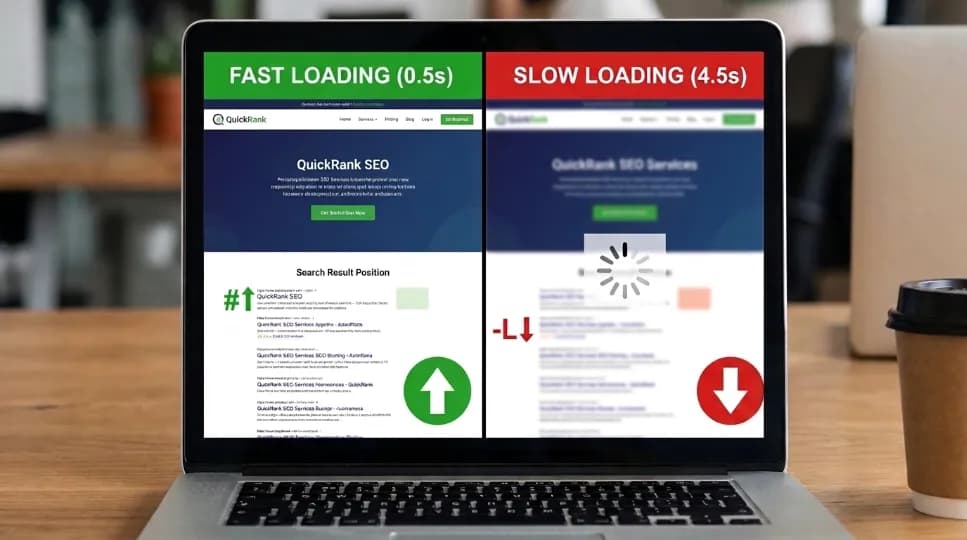
Local SEO Strategies That Actually Get You Clients in 2026

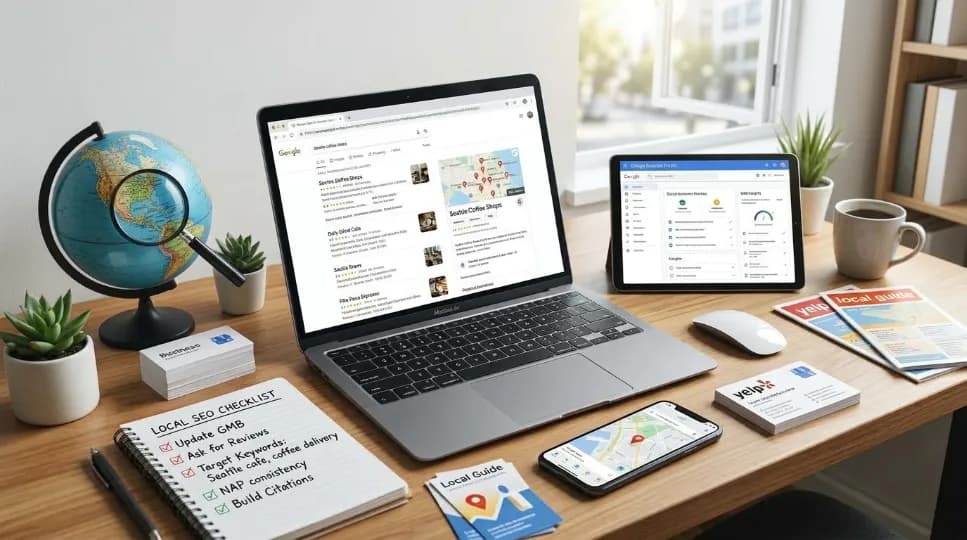
Local SEO strategies refer to the steps that help your business show up in Google searches near you. In simple terms, local SEO is the practice of making your business easy to find for nearby customers. This step-by-step guide shows what works, why it works, and how to start today.
About the Author
Written by: Mitu Das, SEO Specialist and Web Developer. I have worked in SEO and content writing since 2024, focusing on technical SEO, local SEO, content strategy, Google Business Profile optimization, and search-friendly website development.
Reviewed by: Senior Content Strategist at CyberCraft Bangladesh, who checks factual accuracy, SEO practices, sources, and practical value.
Published: May 25, 2026
Last Updated: September 24, 2026
Editorial Review: September 24, 2026
I wrote this guide using my practical SEO and content experience, combined with a review of 2026 local SEO research. I focused on Google Business Profile optimization, local reviews, citations, local links, location-focused website content, and the factors that influence local search visibility.
Key Takeaways
Google ranks local results mainly by relevance, distance, and prominence.
A complete Google Business Profile is the base of every local plan.
97% of consumers read reviews before choosing a local business, so ask for them often.
Local links, citations, and service pages build trust over time.
Steady, honest work wins. Fake reviews can bring legal trouble.
Table of Contents
Why local search matters
How Google ranks local businesses
Google Business Profile setup
Reviews, citations, and links
Website content
Common mistakes
Conclusion and next steps
Frequently Asked Questions
How I put this guide together
Sources: Google's help guidance (via Search Engine Journal), Whitespark's 2023 and 2026 ranking factor surveys, BrightLocal's 2026 consumer data, Advice Local's 2026 summary, Google Search Central, and the FTC.
Criteria: I kept local SEO strategies only when at least one named source supported them. I labeled anything else as opinion or left it out.
Steps: I collected figures, traced each to a publisher or a clear summary, compared the 2023 and 2026 scores, then ranked tactics by how much control you have over them.
Limits: Whitespark scores reflect expert opinion, not Google's code. BrightLocal surveys US consumers. Some figures come through summaries.
Assumption: You run a small business with a real, verifiable location.
What Are Local SEO Strategies and Why Do They Matter?
Local SEO strategies are practical actions that raise your visibility when people search for nearby services. They matter because people search locally and quickly. According to BrightLocal, 84% of consumers searched for a local business in the past three months. Therefore, a strong local presence helps people find you when they search.
In September 2026, I reviewed Google's guidance, Whitespark's 2026 expert survey, and BrightLocal's 2026 consumer data for this guide. First, I collected each figure. Then I traced it to the publisher or a clear summary of it. Treat every figure as a strong hint, not a promise.
Here is why the stakes are high. BrightLocal reports that 80% of US consumers search online for local businesses every week, and 32% search daily, based on 2024 SOCi data. Also, 75% decide which business to use in under 30 minutes, and 72% look at three or fewer businesses. Meanwhile, 46% say they always or often add "near me" to local searches. So your local SEO strategies must earn a spot on that short list.
The good news? Local SEO strategies for small businesses are not complicated. Most local SEO best practices come down to three habits: be accurate, be active, and be honest.
How Does Google Rank Local Businesses?
Google ranks local results mainly by relevance, distance, and prominence. Relevance is how well your profile matches the search. Distance is how far you are from the searcher. Prominence is how well known and trusted you seem online. According to Search Engine Journal, Google says complete business details and more positive reviews can improve your local ranking.
Read more about relevance, distance, and prominence. Next, see how experts score local SEO ranking factors. Discover the full 2026 Whitespark survey. It gave these main local pack scores, as compared by GMB API: gmbapi
Local pack factor | 2026 score | 2023 score | Change |
|---|---|---|---|
Primary Google Business Profile category | 227 | 193 | +17.6% |
Proximity to searcher | 225 | 176 | +27.8% |
Keywords in business title | 223 | 181 | +23.2% |
Physical address in the search city | 213 | 170 | +25.3% |
Open at the time of search | 189 | Not in top 10 | New |
My calculation: change = (2026 − 2023) ÷ 2023, using Whitespark's published scores. The four factors that appear in both years rose 23.5% on average, so experts now weigh them more heavily. Scores measure expert opinion, not Google's algorithm.
What stood out to me: all four factors listed in both years scored higher in 2026, and "open at the time of search" is new to the top 10. In practice, that suggests accurate hours deserve a place on your weekly checklist. Good local SEO strategies treat hours as a ranking signal, not an afterthought.
However, distance is hard to change. Search Engine Land notes that updating your profile details alone is unlikely to overcome Google's proximity bias. Learn more about Google's distance bias. Therefore, your local SEO strategies must build relevance and prominence too. Also, use your real business name. Stuffing keywords into it breaks Google's rules. For regular local results, the mix shifts, so your local SEO strategies should shift too. Advice Local's 2026 summary lists on-page signals at 33%, link signals at 24%, behavioral signals at 10%, Google Business Profile signals at 7%, citation signals at 7%, and review signals at 6%.
How Do You Optimize Your Google Business Profile?

Google Business Profile optimization means filling every field with accurate details and keeping them fresh. Start by claiming and verifying your listing. Then pick the most exact primary category, add services, hours, and photos, and answer reviews. In most cases, complete and current profiles earn more trust and more clicks.
Follow these steps:
Step 1: Claim and verify your profile.
Step 2: Pick one exact primary category. Then add a few extra ones.
Step 3: Add your services, hours, and holiday changes.
Step 4: Upload real photos every month.
Step 5: Ask for reviews, and reply to every one.
One more data point: BrightLocal's 2026 survey, as summarized by PinMeto, found that 80% of consumers are more likely to use a business that replies to all its reviews, but 50% are put off by generic, templated replies. So write each reply by hand.
Illustrative example (not a real client): Picture a small dental clinic that appears on page two of local results. Problem: It uses a vague category, has 6 old reviews, and lists three different phone numbers online. Approach: It switches to an exact primary category, fixes every listing to one name, address, and phone number, and asks patients for honest reviews each week. Expected result: Research suggests these fixes improve relevance and prominence over several months, though outcomes vary.
Which Local SEO Strategies Build Reviews, Citations, and Links?
Three local SEO strategies build trust fastest: review requests, local citation building, and local link building strategies. Ask happy customers for honest reviews. List your business with the same name, address, and phone number everywhere. Then earn links from local news, chambers of commerce, and partners.
Reviews come first, so local SEO strategies start there. BrightLocal reports that 97% of consumers read reviews for local businesses. In its February 2026 survey of 1,002 US adults, 85% were more likely to use a business after reading positive reviews, and 77% were put off by negative ones. Also, 65% of consumers who rejected a business did so for a review-related reason. So ask every happy customer soon after the job.
However, never fake reviews. The FTC announced its final rule on August 14, 2024, and it took effect on October 21, 2024. It bans fake reviews. For knowing violators, civil penalties can reach $51,744 per violation, according to WilmerHale. Read the FTC's full announcement. Federal Trade Commission Announces Final Rule Banning Fake Reviews and Testimonials +3
Next comes local citation building. A citation is any mention of your business name, address, and phone number. Add yours to Yelp, Apple Maps, Bing Places, and major industry sites. Keep every detail identical.
Meanwhile, local link building strategies work best through real ties. For example, sponsor a youth team, join your chamber of commerce, or share a tip with a local blogger. Each link tells Google that real people trust you.
How Can Your Website Content Improve Local Search Rankings?

Your website helps local search when each service and each city has a clear, useful page. Use local keyword research to learn how people search. Then match those words in titles, headings, and page text. Add LocalBusiness schema so Google can read your hours and details. In practice, helpful pages beat thin ones.
Start with Google's autocomplete. Type your service and your town, like "what is a home energy audit in Denver," and note the phrases. Then build one page per main service. Strong local SEO strategies treat your website as your home base.
Good local SEO content strategies answer real questions. For instance, write about local costs or a job you finished nearby. Furthermore, Google Search Central explains that LocalBusiness structured data lets you tell Google about business hours, departments, and more. Learn more about LocalBusiness structured data.
Common Local SEO Mistakes to Avoid
Knowing how to improve local search rankings also means dodging these traps. Even smart local SEO strategies stall when you make these local search optimization mistakes:
Use different names, addresses, and phone numbers across sites.
Choose a vague primary category.
Ignoring bad reviews or faking good ones.
Stuffing keywords into your business name.
Make thin, copy-and-paste pages for every town.
Conclusion: Your Next Steps for Local SEO Strategies
So, what are local SEO strategies in the end? They are honest, repeatable habits that help Google and customers trust your business. Now you know how local SEO strategies work. Google weighs relevance, distance, and prominence. You can't change distance, but you can improve the other two. Finish your Google Business Profile, earn real reviews, keep your listings consistent, and publish helpful local pages.
Here is your plan. First, this week, complete your profile. Second, ask five happy customers for reviews. Third, fix your name, address, and phone number on main directories. Next month, add one helpful local page and earn one local link. At CyberCraft Bangladesh, we also focus on consistent SEO practices rather than short-term bursts. Research suggests steady effort beats sudden bursts. Therefore, start small today, and keep going.
Ready for the next step? Once you understand the basics, these guides show how to apply local SEO strategies:
Compare local SEO tools to see which features you need.
See options for managing your Google Business Profile, from doing it yourself to getting help.
Which one fits your business? Read our review of local SEO services.
Quick glossary of local SEO strategies
Local pack: the map box with three business listings at the top of local results.
NAP: your business name, address, and phone number.
Citation: any web mention of your NAP, such as a directory listing.
Structured data (schema): code that labels facts on a page, like hours, so search engines can read them.
Proximity bias: Google's habit of favoring businesses closer to the searcher.
Backlink: a link from another site to yours.
Frequently Asked Questions About Local SEO Strategies
How long does local SEO take to work?
Results from local SEO strategies vary by market and competition. In most cases, small gains from profile fixes can appear within weeks, while stronger rankings often take several months. Evidence on exact timelines is limited. Therefore, track your progress monthly, and avoid anyone who promises quick, certain rankings.
What is the difference between local SEO and regular SEO?
Regular SEO aims to rank pages for anyone, anywhere. Local SEO aims to rank your business for people near you. Local SEO strategies add location signals such as your Google Business Profile, reviews, and local citations. However, both need helpful content and a healthy website.
Do I need a website for local SEO?
A profile can appear without a website. However, a site gives Google more clues about your services and area. It also gives readers a place to learn more. BrightLocal found that 54% of consumers visit a business's website after reading positive reviews. Therefore, most local SEO strategies work better with a simple, fast site.
How many reviews do I need?
There is no magic number. However, BrightLocal's 2026 survey, as summarized by PinMeto, found that 31% of consumers say they want a rating of at least 4.5 stars. Also, 74% look for reviews written in the last three months. So aim for steady, recent, honest reviews instead of one big push.
Can AI tools mention my local business?
Yes. BrightLocal reports that 45% of consumers use ChatGPT or other AI tools for local business recommendations. In my read, consistent listings, strong reviews, and clear website pages likely help. However, no one controls those tools. Keep your details accurate everywhere, and keep earning honest reviews.

I’m Mitu Das, a JavaScript developer, ERP product architect, and SEO specialist from Bangladesh. I work at CyberCraft Bangladesh, where I help build simple, scalable software, SaaS platforms, and business solutions. My goal is to create technology that helps companies save time, automate daily tasks, and grow faster. I enjoy combining development, product ideas, and SEO strategies to create useful digital solutions for modern businesses.
Writes about
Want this done for you?
Our team builds and ships exactly what this article describes. Send a message and we will reply with a scope.