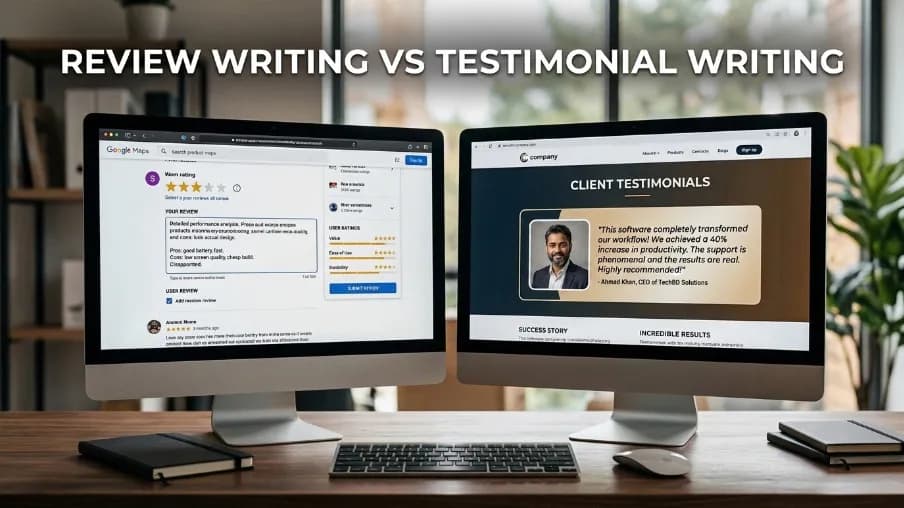
AI-Assisted Content Writing Mistakes You Should Avoid


I've read a lot of AI-written articles lately. Some are great. Most are not. Here's the truth. AI-assisted content writing is not the problem. The way people use it is the problem. I've tested dozens of AI drafts, published some, killed others, and learned the hard way what works and what wastes your time.
In this article, I'll walk you through the most common mistakes people make with AI-assisted content writing. I'll also show you how to fix each one. By the end, you'll know how to use AI as a tool, not a crutch, and still produce SEO friendly content writing that ranks and reads well.
Let's get into it.
What Is AI-Assisted Content Writing
AI-assisted content writing means using tools like Claude or ChatGPT to help you draft, outline, or polish content. It's not the same as letting AI write the whole piece and hitting publish.
Think of AI as a fast intern. It can draft quickly. It can suggest structure. But it doesn't know your brand voice, your audience's pain points, or what happened in your last customer call. That part is still on you.
The gap in the market right now isn't "how to use AI to write faster." Everyone already knows that. The real gap is knowing where AI fails silently, and where a human needs to step in. That's what this article covers.
Mistake 1: Publishing AI Drafts Without Human Editing
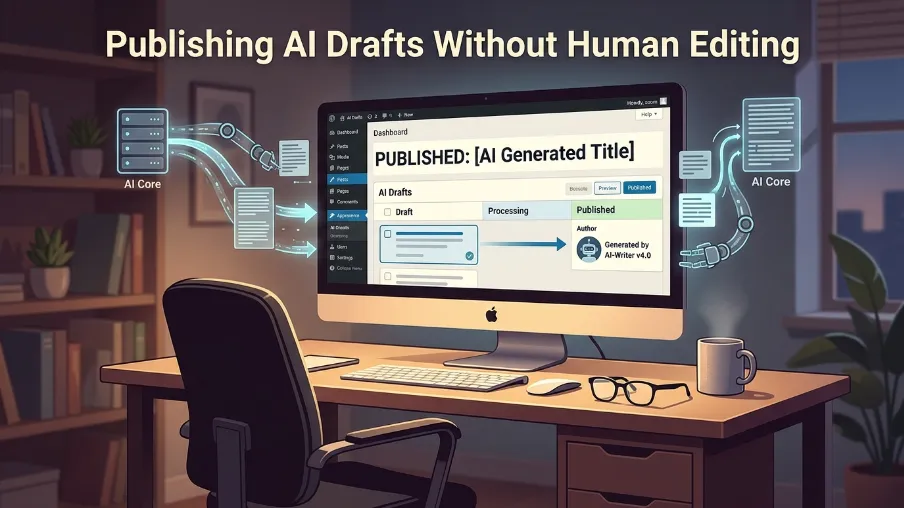
This is the biggest one. I see it everywhere.
Someone generates a draft, skims it, and hits publish. The article reads fine on the surface. But it's flat. No personality. No real insight.
Readers notice this fast, even if they can't explain why. They bounce. Google notices too, through engagement signals like time on page and return visits.
The fix: Treat every AI draft as a first draft, not a final one. Read it out loud. Cut sentences that sound generic. Add one detail only you would know, like a real client story or a mistake you made yourself. That one detail changes everything.
Mistake 2: Ignoring Search Intent and SEO-Friendly Content Writing

AI tools are good at answering the question you type. They're not always good at answering the question your reader actually has.
For example, if someone searches "AI-assisted content writing," some want a definition. Others want tools. Others want to know if it will hurt their SEO. If your article only covers one angle, you miss the rest.
This is where a lot of SEO friendly content writing efforts fail. The content is well-written, but it doesn't match what the searcher wants at that moment.
The fix: Before you prompt the AI, check the search results yourself. Look at the "People also ask" box. Look at what's already ranking. Then tell your AI tool exactly which intent to target. Don't guess. Check.
Mistake 3: Keyword Stuffing Instead of Quality Content Writing
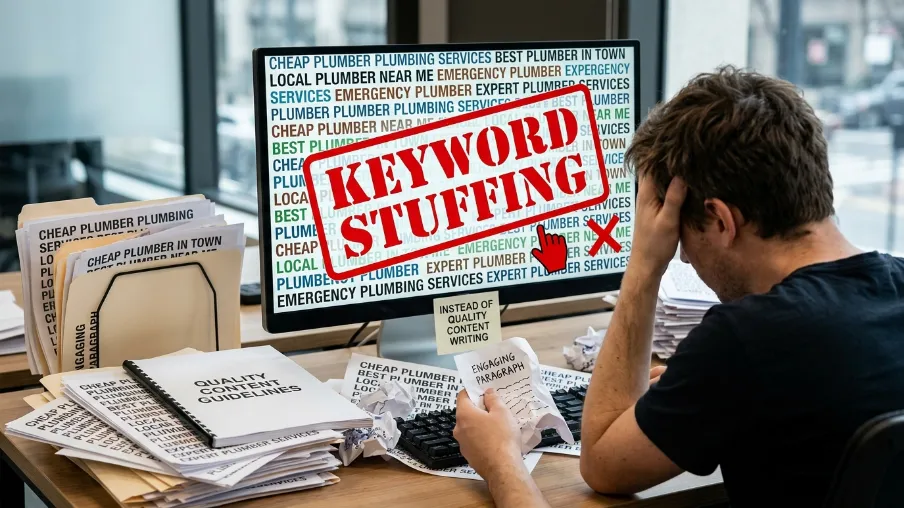
Old habits die hard. Some writers still repeat the keyword every other sentence, thinking it helps rankings. It doesn't. It hurts readability, and Google's algorithms are built to catch it.
Quality content writing means the keyword shows up naturally, the way you'd actually say it in conversation. Not forced. Not repeated five times in one paragraph.
The fix: Aim for natural keyword density, around 1 to 2 percent. Use variations. Instead of repeating "AI-assisted content writing" constantly, mix in phrases like "writing with AI help" or "AI-supported drafts." This keeps the flow human and still signals relevance to search engines.
Mistake 4: Skipping E-E-A-T and Real Experience
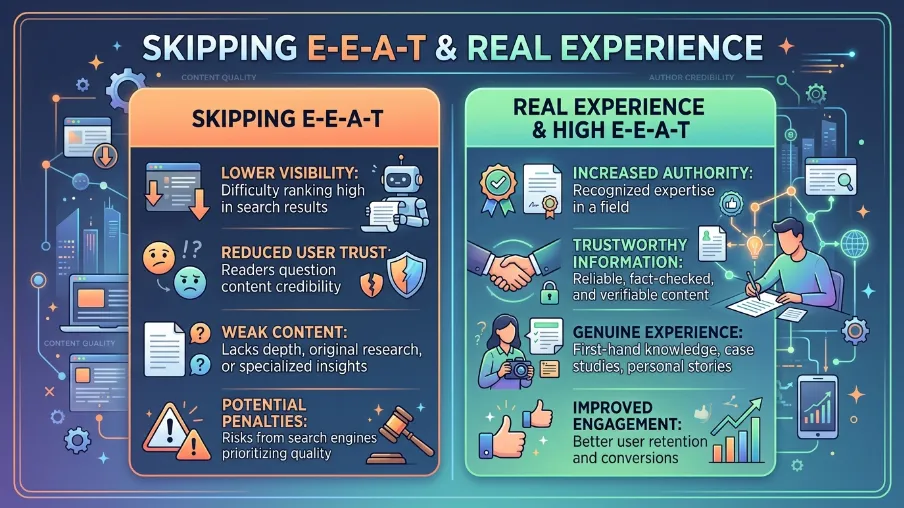
E-E-A-T stands for Experience, Expertise, Authoritativeness, and Trustworthiness. Google uses this to judge whether content is genuinely helpful or just filler.
AI can write expertise-sounding sentences. What it can't fake is experience. It hasn't actually used the tool, missed a deadline because of a bad prompt, or fixed a client's messy draft at 11 PM.
Articles that skip this signal read like a summary of other articles. They add nothing new. That's a red flag for both readers and search engines.
The fix: Add a short story, a specific number, or a real opinion. Say what surprised you. Say what you'd do differently next time. This is the fastest way to separate your content from the dozens of AI-generated look-alikes out there.
Mistake 5: Overlooking AI Detection and Authenticity

Many publishers now check content with AI detection tools before it goes live. High AI-detection scores can hurt trust with editors, clients, and sometimes search visibility.
The irony is that most AI text isn't detected because it's factually wrong. It's detected because of rhythm. AI tends to write in even, predictable sentence lengths. Humans don't. We write short, then long, then short again. We interrupt ourselves.
The fix: After generating a draft, vary your sentence length on purpose. Break up long sentences. Add short ones for punch. Read your paragraph and ask, "Would I actually say this out loud?" If not, rewrite it.
Mistake 6: Forgetting Featured Snippets, FAQs, and AEO Optimization

This one is growing fast in importance. AEO (answer engine optimization) and GEO (generative engine optimization) matter now because people get answers directly from AI chat tools and Google's AI overviews, not just blue links.
If your content never gives a direct, quotable answer, AI engines and featured snippets skip right past it.
The fix: For each major question in your article, answer it in one or two short sentences right after the heading. Then expand with detail. This format works well for both featured snippets and AI-generated answers, because it's easy to lift and cite.
Mistake 7: Ignoring Internal Linking and Content Structure

AI-generated drafts often come out as one long block of disconnected sections. There's no natural bridge between ideas, and no thought given to what other pages on your site could support the topic.
This hurts both SEO and user experience. Readers get lost. Search engines can't tell how your content connects to the rest of your site.
The fix: Plan your internal links before you write. If you have a related guide on SEO friendly content writing or quality content writing, link to it naturally within a sentence, not as an awkward add-on at the end.
A Simple Workflow to Avoid These Mistakes
Here's the process I actually use now:
- Research search intent manually first, not just through AI.
- Prompt AI for a structured draft, not a finished article.
- Edit for voice, adding real experience and specific details.
- Check keyword density and remove any repetition.
- Add direct answers under each heading for snippet and AEO optimization.
- Read the whole piece out loud before publishing.
This takes maybe 20 extra minutes per article. That's a small price for content that actually performs.
Final Thoughts
AI-assisted content writing works best when you treat it as a starting point, not a finish line. The mistakes above aren't really about AI. They're about skipping the human judgment that makes content genuinely useful.
If you're publishing AI-assisted content, take the extra time to edit for voice, match real search intent, and add your own experience. That's what turns a decent draft into quality content writing that readers trust and search engines reward.
Ready to improve your content process? Start by auditing your last three published articles against the mistakes above. You'll likely spot at least one quick fix you can make today.
FAQs About AI-Assisted Content Writing
Is AI-assisted content writing bad for SEO?
No, it's not bad by itself. The mistakes come from how it's used, like skipping edits or ignoring search intent, not from the tool itself.
How much should I edit an AI-generated draft?
Enough to add your own voice, real examples, and at least one detail only you would know. A light skim isn't enough.
What's the ideal keyword density for SEO friendly content writing?
Around 1 to 2 percent. Anything higher usually reads as forced and can hurt rankings instead of helping them.
Can Google tell if content is AI-generated?
Google says it focuses on content quality, not how it was produced. But low-quality, unedited AI content tends to fail on helpfulness signals regardless of detection tools.
What is AEO and why does it matter for content writing?
AEO means answer engine optimization. It means writing clear, direct answers so AI tools and search engines can easily pull and cite your content.

I’m Mitu Das, a JavaScript developer, ERP product architect, and SEO specialist from Bangladesh. I work at CyberCraft Bangladesh, where I help build simple, scalable software, SaaS platforms, and business solutions. My goal is to create technology that helps companies save time, automate daily tasks, and grow faster. I enjoy combining development, product ideas, and SEO strategies to create useful digital solutions for modern businesses.
Writes about
Want this done for you?
Our team builds and ships exactly what this article describes. Send a message and we will reply with a scope.