Creative Digital Marketing: Top Strategies That Work in 2026


Let me be honest with you, when I started in digital marketing, I thought the job was mostly about finding the right keywords and spending money in the right places. Set up a campaign, watch the numbers, and adjust the bids. Rinse and repeat.
That approach worked for a while. Then it stopped working.
What I've learned after years of running campaigns, testing hundreds of ad creatives, and watching consumer behavior shift is this: Creative digital marketing is the single biggest performance lever available to you right now. Not your budget. Not your targeting. You're creative.
In this guide, I'm going to walk you through everything you need to know about what digital marketing really is at its creative core, why the old methods are falling behind, which tools will give you an edge in 2026, and how to build a strategy that actually connects with real people instead of just chasing clicks.
Whether you're a marketing professional, a small business owner, or someone just starting to figure out what digital marketing is and how it works, this one is for you.
What Is Creative Digital Marketing
Before we dive into tactics, let's align on definitions because I see a lot of confusion here.
Digital marketing is the use of online channels, search engines, social media, email, websites, video platforms to reach and convert your target audience. That's the technical definition. But "creative digital marketing" is something more specific.
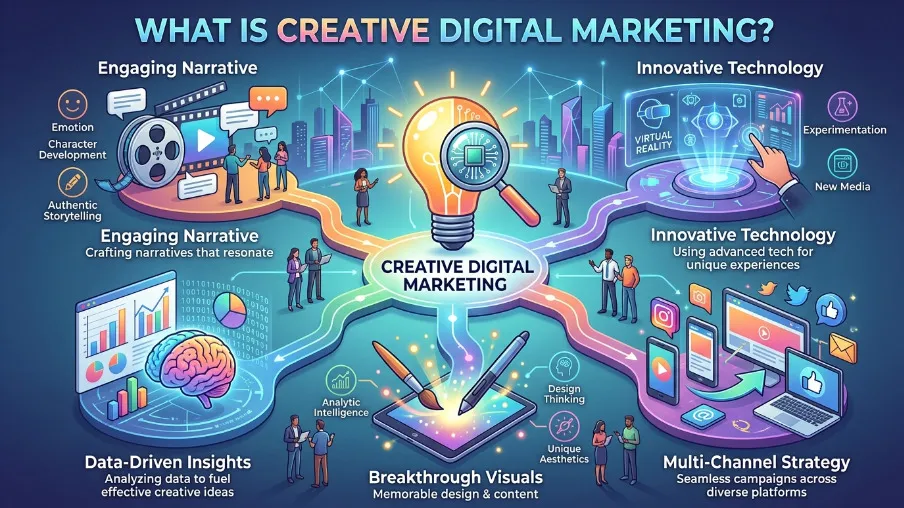
Creative digital marketing is the deliberate, strategic use of storytelling, design, emotion, and original ideas to make your digital campaigns resonate, not just reach. It's the difference between an ad someone scrolls past and one they stop to watch, share, or act on.
Here's a direct answer to one of the most common questions I get:
What is digital marketing? Digital marketing refers to all marketing efforts that use the internet or electronic devices including search engine optimization (SEO), paid advertising (PPC), social media marketing, email marketing, content marketing, and video to connect brands with audiences online.
But creative digital advertising goes beyond mechanics. It brings human insight, visual storytelling, and emotional intelligence into those channels to make campaigns genuinely memorable.
Creative Digital Marketing vs Traditional Digital Marketing: What Actually Performs Better
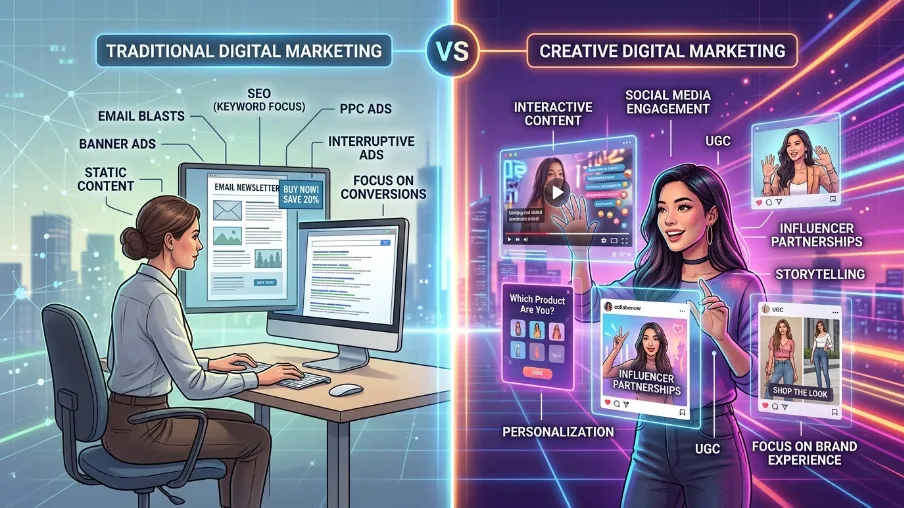
This is one of the biggest debates I hear from clients and colleagues, and it deserves a clear-eyed answer.
Traditional Digital Marketing: Formula-First Thinking
When most people talk about "traditional" digital approaches, they mean things like:
- Keyword targeting and SEO-heavy content
- Demographic-based audience segments
- Static banner ads and templated email blasts
- Rigid campaign structures built around a media plan
These methods aren't worthless SEO still matters enormously, and email marketing still delivers great ROI. But here's the gap I keep seeing: when everyone uses the same tools in the same way, the results converge. Your ad starts looking like your competitor's ad. Your content sounds like every other blog in your space.
Creative Digital Marketing: What's Actually Driving Results in 2026
Research from Adobe's 2026 Creative Trends Report found that nearly 50 percent of customers say they're more likely to buy from brands that make them feel joy. And according to Smartly's 2026 Digital Advertising Trends Report, three in four respondents said they're concerned that AI-generated creative risks making brands look and sound the same, and 86% have already seen AI outputs that resemble content from competitors.
That's the market gap I want you to see clearly. Everyone is using the same AI tools to produce faster content. The brands that win are the ones combining that speed with genuine creative differentiation.
The Bottom Line on Effectiveness
Creative digital advertising consistently outperforms generic campaigns on the metrics that matter: click-through rate, cost-per-acquisition, return on ad spend, and brand recall. A brand-new account can outperform a legacy one with the right content, and an individual can generate more trust than an institution. Creativity has democratized performance.
Four Creative Pillars That Define Winning Digital Campaigns
I've tested this across industries retail, SaaS, services, e-commerce and the same four pillars keep showing up in campaigns that break through.
1. Sensory-Rich Storytelling
Flat, polished content is losing attention. What's working now is content that triggers the senses visuals with texture, copy that evokes sound or smell, videos that feel tactile and real.
Adobe's research shows that in 2026, the creative vibe comes down to one idea: people want content that feels human content they can touch, taste, hear, and feel that sparks connection, encourages play, and is grounded in local culture.
If you're using AI image tools, this means moving beyond "describe what it looks like" in your prompts. Try describing how it sounds, how it feels, what temperature it suggests. That's what takes creative from pretty to powerful.
2. Authentic, Local-First Messaging
Global reach with a local voice that's the creative sweet spot. Gen Z is craving what's real and what's local. To reach people where they are, you need to embed yourself in their world: partner with local creators, showcase regional craftsmanship, uplift community stories, and celebrate cultural specificity instead of trying to universalize everything.
For businesses in markets like South Asia, Southeast Asia, or anywhere with rich cultural specificity, this is actually a competitive advantage. Local businesses have an authentic claim to community stories that global brands have to work hard to manufacture.
3. Emotion Over Polish
This one surprised me when I first started testing it. Rough edges, real people, and honest stories consistently outperformed slick studio productions in our A/B tests especially on social platforms.
Design is emotional, not just aesthetic. Overly polished isn't the goal connection is. Creativity means immediate impact and resonance.
If your brand has been hiding behind perfectly curated imagery, it might be time to show some texture.
4. Data-Informed Creative Iteration
Here's where creative digital marketing intersects with analytics. The best creative teams today aren't guessing they're studying what works, building frameworks from their winners, and iterating fast.
Creative analytics is essential in 2026 as creative has become the primary lever for paid media performance differentiation. Platform analytics tell you which ads perform, but not why. Creative analytics go deeper analyzing visual elements, messaging, formats, and patterns to explain what makes certain creatives win.
Best Creative Analytics Tools for Digital Marketing in 2026
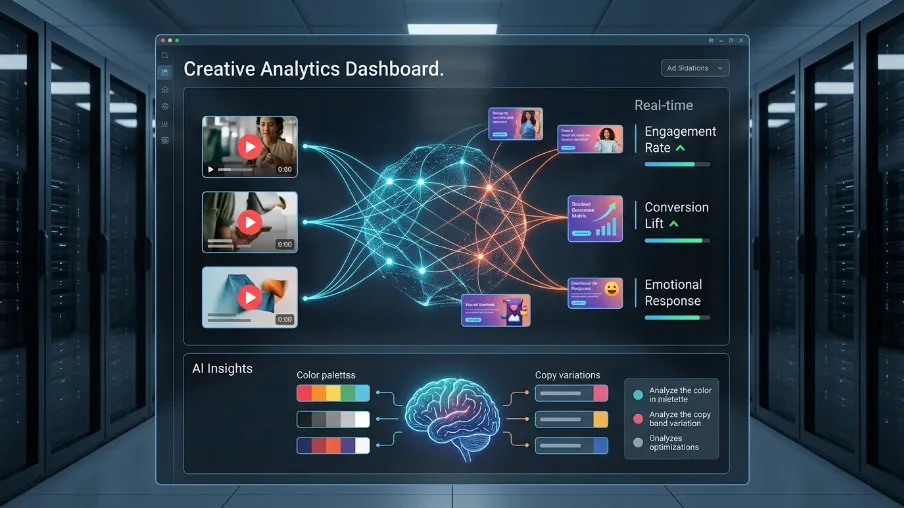
One of the most common questions I get from marketing professionals is: "How do I know which creative is actually working?" Let me break down the tools I'd recommend right now.
Motion Best for Dedicated Creative Intelligence
Motion leads as the top dedicated creative analytics platform, purpose-built for understanding what makes ads work. Their automatic creative tagging identifies elements like hooks, formats, personas, and products, then analyzes performance patterns across your entire creative library.
If you're running significant paid social volume, Motion gives you the "why behind the what" that standard ad managers simply don't surface.
Benly Best for AI-Powered Pattern Analysis
Benly provides AI-powered creative analysis that automatically identifies winning patterns and answers questions in natural language. Think of it as having an analyst who's reviewed all your ads and can tell you in plain English what your winners have in common.
Triple Whale Best for E-Commerce Brands
Triple Whale is built specifically for Shopify stores and direct-to-consumer brands. Their creative analytics let you see which ad creatives drive the highest return on ad spend across Meta, Google, and TikTok campaigns.
Google Analytics 4 (GA4) Still the Foundation
For website behavior, user journeys, and connecting campaign performance to on-site conversions, Google Analytics 4 is widely used as a foundational analytics tool for understanding traffic, user engagement, and on-site interactions. In 2026, it's gotten meaningfully more capable with AI-driven insights.
Semrush: Best for SEO and Content Intelligence
Semrush is a comprehensive digital marketing toolkit including capabilities in SEO, content marketing, competitor analysis, PPC, and social media monitoring. For creative strategists who need to understand what content is resonating in their space before they create, Semrush's content marketing tools are invaluable.
Creative Insights for Digital Marketing Professionals: What the Data Is Telling Us
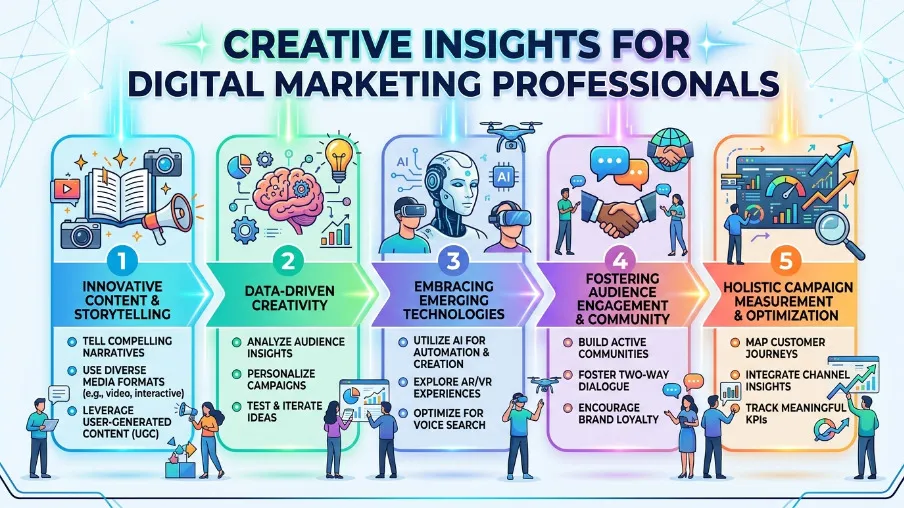
If you're a working digital marketer trying to figure out where to focus your creative energy, here's what the research tells me matters most right now.
AI Is Everywhere, Distinctiveness Is the New Differentiator
Even as 95% of respondents test AI for creative production, widespread use still involves caution, as 42% of respondents who use generative AI still classify their approach as "initial testing." The enthusiasm is there, but the operational readiness hasn't caught up yet.
What this tells me is that the window to differentiate on creative quality is still open but it's narrowing. The brands building systematic creative processes now, with proper analytics and iteration loops, will be harder to compete with in 18 months.
Speed Still Matters, But Not at the Cost of Brand Voice
41% of marketers say it still takes three to four weeks to launch a digital campaign from asset creation to execution, while only 3.6% can go live in under a week.
Your creative workflow is probably slower than it needs to be. But the answer isn't just "use more AI" it's building a process where AI handles the grunt work and your team focuses on brand-distinctive creative decisions.
Video Leads, but Only When Intentional
Video continues to be one of the most powerful ways brands connect with audiences. In 2026, the strongest video strategies are built with intention, balancing creativity, consistency, and scalability across formats and platforms.
Short-form video on TikTok, Instagram Reels, and YouTube Shorts drives massive reach. But I'd rather you publish two carefully crafted videos a month than twenty average ones. Quality signal matters more than volume.
GEO and LLM Visibility Are Now Part of Creative Strategy
This is something a lot of marketers haven't caught up with yet. The battleground for visibility is shifting from who ranks highest in organic search to who is deemed authoritative enough to be cited by the large language models that power AI search summaries. Search visibility is no longer about keywords alone; it's about engineering credibility through E-E-A-T: experience, expertise, authoritativeness, and trustworthiness.
What does this mean for your content? Your creative output blogs, landing pages, case studies needs to be written with the same depth and authority that you'd expect from a subject matter expert. Not just for Google. For AI-powered search that's increasingly how people find answers.
How to Build a Creative Digital Marketing Strategy That Actually Works
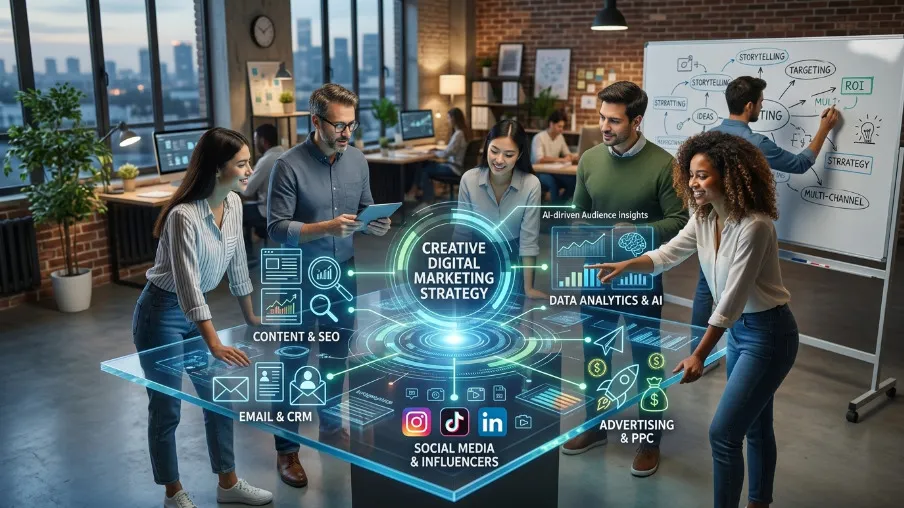
Let me walk you through the framework I use when building campaigns from scratch. This isn't theory it's what works in practice.
Step 1: Define Your Creative Angle Before You Define Your Channel
Most marketers start by picking channels (Instagram, Google Ads, email) and then figure out what to say. Flip that. Start with the creative truth the one honest, compelling thing your brand can say that no one else is saying and then decide where it belongs.
Step 2: Study Your Winning Creative Like a Scientist
If you're already running ads or publishing content, your analytics are full of signals you're probably not reading closely enough. Use creative analytics tools to go beyond CTR and look at which visual elements, hooks, tones, and formats consistently perform. Then brief your next round of creative against those patterns not against gut feeling.
Step 3: Test Small, Scale What Works
I see brands waste enormous budgets scaling campaigns before they've tested the creative. The right process: launch three to five creative variants with a modest budget, give them enough impressions to generate meaningful data (usually 7–14 days in paid social), then scale the winner aggressively and kill the rest.
Step 4: Build for Humans, Optimize for Algorithms
Your creative should make a real person feel something first. Algorithms reward what humans engage with so if your ad would bore a real person, no amount of technical optimization will save it. Write copy your audience would actually want to read. Design visuals they'd actually stop for.
Step 5: Keep Iterating, Creative Fatigue Is Real
Your best-performing ad just died overnight. CTR tanked. CPA doubled. And you're burning your budget while your audience has tuned out. Creative fatigue happens to every campaign, no matter how good the original. Build a cadence of refresh new hooks, new visuals, new angles so you're never caught flat-footed.
Conclusion: The Creative Advantage Is Yours to Claim
The creative advantage in digital marketing is real, and it is available to you right now. In 2026, every brand has access to the same tools, platforms, and AI systems. What you choose to do with them creatively is what truly sets you apart from the competition.
Stop treating creative as the last step in your planning process. Make it the very first. Study what works, iterate fast, and let data sharpen your instincts over time. A strong digital growth strategy begins with bold ideas, consistent testing, and messaging that connects.
The brands winning today are not the biggest spenders. They are simply the best storytellers. Start there, stay consistent, and the results will follow.
Common Questions About Creative Digital Marketing
Q: What is the difference between digital marketing creative and regular content marketing?
Content marketing is typically focused on organic reach blogs, SEO articles, educational resources designed to attract traffic over time. Creative digital advertising usually refers to paid campaign assets ads, landing pages, video scripts designed to drive immediate response. Both benefit from strong creative strategy, but they serve different parts of the funnel.
Q: Is creative digital marketing effective for small businesses?
Absolutely and in some ways, small businesses have an advantage. Authenticity is a creative asset, and small businesses often have more genuine community connection and unique stories than large brands. The key is focusing your limited budget on a few channels where your audience actually is, and investing in creative quality over quantity.
Q: How do I measure the ROI of creative in digital marketing?
This is where creative analytics tools become essential. Track performance by creative variant, not just by campaign. Look at metrics like thumb-stop rate (what percentage of people pause on your ad), engagement rate, cost-per-click by creative, and ultimately cost-per-acquisition. Compare across creative types and visual approaches to find patterns.
Q: How is AI changing creative digital marketing in 2026?
AI is accelerating production generating copy variants, image concepts, video scripts but it's not replacing creative strategy. The marketers winning right now are using AI to iterate faster while bringing human judgment about brand voice, emotional resonance, and cultural relevance that AI tools still struggle to replicate. Think of AI as your production assistant, not your creative director.
Q: What are the most important creative digital marketing skills to develop right now?
Based on what I'm seeing in the market: (1) visual storytelling and understanding what makes content scroll-stopping; (2) data literacy being able to read creative analytics and make decisions from them; (3) understanding AI tools well enough to direct them effectively; and (4) writing copy that sounds human and builds trust. These four skills together are the rare combination that makes a digital marketer genuinely valuable in 2026.

I’m Mitu Das, a JavaScript developer, ERP product architect, and SEO specialist from Bangladesh. I work at CyberCraft Bangladesh, where I help build simple, scalable software, SaaS platforms, and business solutions. My goal is to create technology that helps companies save time, automate daily tasks, and grow faster. I enjoy combining development, product ideas, and SEO strategies to create useful digital solutions for modern businesses.
Writes about
Want this done for you?
Our team builds and ships exactly what this article describes. Send a message and we will reply with a scope.