Social Media Marketing Strategy: Complete Guide to Growing Your Brand in 2026


Let's be honest. Posting on Instagram and hoping for the best is not a strategy. It's a guess.
I've spent years building and running social campaigns for brands, from small local shops to growing B2B companies. I've seen so many businesses pour hours into content every week and get almost nothing back. Low likes. No leads. No sales. It's frustrating, and I get why.
Here's the good news. A real social media marketing strategy fixes this. It's not about posting more. It's about posting with purpose. It's also one of the most important pieces of any creative digital marketing approach, because social is where most people spend their time online. When your creativity is backed by a clear strategy, every post has a better chance of driving engagement, building trust, and generating real business results.
In this guide, I'll walk you through how to build a social media marketing strategy from scratch, using the same steps I use with clients. You'll learn how to set goals, pick the right platforms, plan content, and choose tools that save you time. No fluff. Just practical steps you can use today.
By the end, you'll know exactly how to create a social media marketing strategy for your business, whether you're a solo founder or running marketing for a growing brand.
What Is a Social Media Marketing Strategy
A social media marketing strategy is a written plan that outlines your goals on social media, your target audience, the platforms you'll use, and the content you'll post to reach them. It also includes how you'll measure results, so you know what's working.
Think of it like a roadmap. Without it, you're just driving around hoping to end up somewhere good.
A strong strategy answers five simple questions:
- What are we trying to achieve?
- Who are we talking to?
- Which platforms matter most for us?
- What kind of content will we post?
- How will we know if it's working?
If your plan can answer all five, you're already ahead of most brands online.
Why Your Business Needs a Social Media Strategy
Social media isn't small anymore. It's where people discover brands, read reviews, and decide what to buy.
Short-form video now drives the strongest returns among video formats, at around 41%, according to Sprout Social's 2026 research. And most organizations say influencer content outperforms regular digital ads, often by 2 to 3 times. That's a big shift in how people trust content.
People are also skipping search engines. They're going straight to Instagram or TikTok to research products before they buy. Power Digital's 2026 consumer research found that nearly 6 in 10 consumers now rely on Instagram, and just over half turn to TikTok, when researching products. That's a real shift away from traditional search.
And this matters a lot for customer service too. Most consumers feel more loyal to brands that reply to comments, and a good chunk say they won't buy from brands that ignore them. The same research found about 7 in 10 consumers "often or always" look for user reviews before buying, and roughly 3 in 4 feel more loyal to brands that reply to comments or messages.
So a strategy isn't optional anymore. It's how you stay visible, build trust, and actually turn followers into customers. It's also one of the fastest paths to real digital growth, since social channels feed traffic straight into your website, your email list, and your sales pipeline.
Common Social Media Marketing Goals
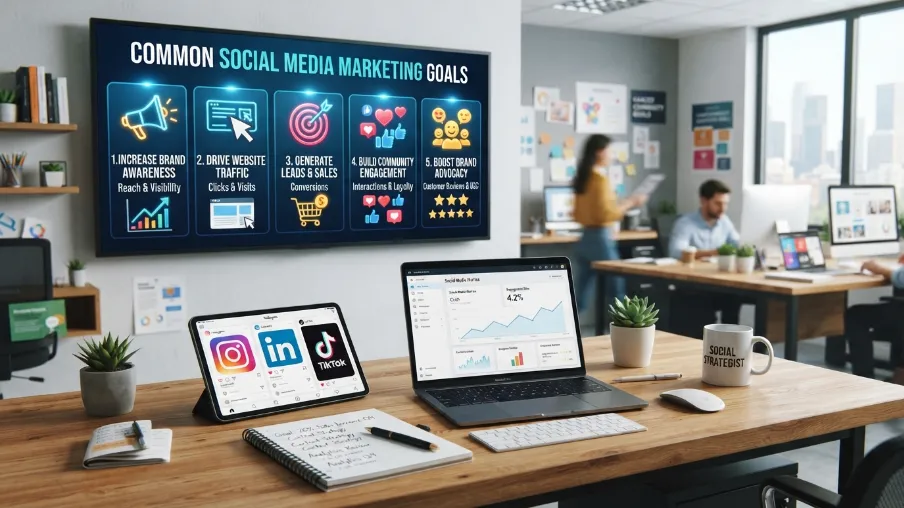
Before you post anything, pick your main goal. Trying to do everything at once is why most plans fail. Common goals include:
- Brand awareness: get more eyes on your business
- Engagement: build a community that talks back
- Lead generation: collect emails, sign-ups, or inquiries
- Sales: drive direct purchases through social
- Customer support: answer questions fast and build trust
Pick one or two. Not five. You can always add more later.
How to Create a Social Media Marketing Strategy (Step by Step)
This is the part most guides rush through. I won't. Here's exactly how to build a plan that works.
Step 1: Set Clear, Measurable Goals
Don't just say "grow our social media." Say "get 500 new email sign-ups from Instagram in 90 days."
Specific goals help you know if you're winning or losing. Use the SMART method: Specific, Measurable, Achievable, Relevant, Time-bound.
Step 2: Know Your Audience
You can't talk to everyone. Figure out who your ideal customer is. What do they struggle with? Where do they spend time online? What kind of content stops their scroll?
If you sell to businesses, your audience looks different than if you sell to everyday shoppers. This is where a B2B social media marketing strategy and a B2C one split apart completely. B2B buyers want proof, case studies, and expertise. B2C buyers want fun, fast, relatable content.
Step 3: Study Your Competitors
Look at three to five competitors. What are they posting? What gets the most comments? What are they missing?
You don't need to copy them. You need to find the gap. That gap is your opportunity.
Step 4: Choose the Right Platforms
You don't need to be everywhere. You need to be where your audience already is.
- Instagram: strong for visual brands, product discovery, and younger audiences
- Facebook: still huge for local businesses and older audiences
- LinkedIn: best for B2B, hiring, and thought leadership
- TikTok: best for short-form video and fast growth
Marketers are shifting more budget toward video-first platforms this year, with TikTok being the channel most plan to lean into for growth, since short-form video is the top format marketers say they'll invest in going forward. But don't chase every platform. Pick two or three and do them well.
Step 5: Plan Your Content Mix
Your content should do more than sell. A good mix looks like this:
- 40% educational or helpful content
- 30% entertaining or relatable content
- 20% social proof (reviews, testimonials, case studies)
- 10% direct promotion
This keeps your feed useful, not just salesy. People follow brands that add value, not brands that only ask for money.
Step 6: Set a Budget
Decide how much you'll spend on paid social versus organic content. Even a small ad budget can boost your best-performing posts. Paid social continues to take a bigger share of ad budgets, and Sprout Social reports roughly 8 in 10 marketing leaders plan to shift more spend toward social this year. If you already run other digital marketing channels, like email or paid search, treat this budget as part of that bigger picture, not a separate line item.
Step 7: Measure and Adjust
Check your numbers every month. Look at what's working and drop what isn't. A strategy isn't a one-time document. It's something you revisit and improve.
Building a Social Media Content Strategy and Calendar
A content calendar is your best friend. It keeps you consistent and takes the guesswork out of "what do I post today."
Pick Your Content Pillars
Content pillars are the three to five main topics you'll always talk about. For example, a fitness brand might use:
- Workout tips
- Client transformations
- Behind-the-scenes gym life
- Nutrition advice
Every post you create should fit under one of these pillars. This keeps your brand focused and easy to recognize.
Plan Ahead, But Stay Flexible
Map out your content a month in advance. But leave room for trending topics or timely news. The best social media content strategy blends planned posts with real-time moments.
Batch Your Content
Don't create content one post at a time. Set aside one day a week or month to film, write, and design everything in one go. This saves hours and keeps quality consistent.
Platform-Specific Strategies That Actually Work
Every platform has its own rules. What works on Instagram might flop on LinkedIn.
Instagram Marketing Strategy
Instagram rewards visuals and short video. Reels get the most reach right now. Post consistently, use captions that hook people in the first line, and always include a call to action.
Facebook Marketing Strategy
Facebook still works well for local businesses and community building. Groups are powerful here. Join or build one around your niche and show up often.
LinkedIn Marketing Strategy
LinkedIn is where B2B brands win. Post thought leadership, industry insights, and real stories from your team. According to HubSpot's State of Marketing data, LinkedIn usage among marketers has grown by double digits this past year, so competition is rising, but so is the audience size. If you're running a B2B social media marketing strategy, this platform deserves your biggest focus.
Social Media Branding Strategy
Whatever platform you choose, keep your voice, colors, and message consistent. Your brand should feel like the same person is talking, whether someone sees you on Instagram or LinkedIn. Consistency builds trust. Trust builds sales.
Social Media Engagement Strategy: Turning Followers Into Fans
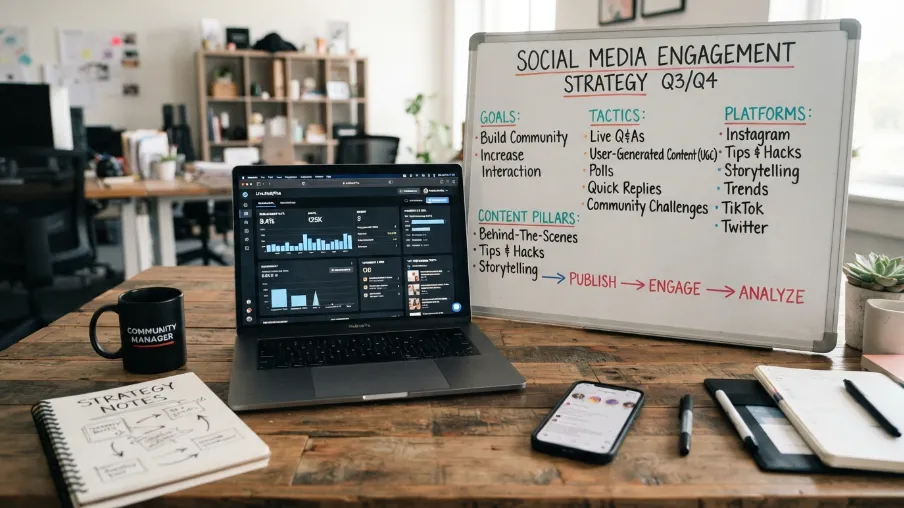
Growth means nothing if nobody engages. Here's how to build real engagement.
- Reply to every comment and DM: Fast responses build loyalty and trust.
- Ask questions in your captions: People love sharing opinions.
- Use polls and stories: They're quick, fun, and boost visibility.
- Feature your community: Repost customer content and tag them.
People increasingly trust real customer content over polished brand ads. Most consumers now look for user-generated content before making a purchase, and everyday creators often outperform celebrity endorsements when it comes to actual conversions. So don't be afraid to let your customers do some of the talking for you.
Social Media Marketing Examples You Can Learn From
Sometimes the best way to understand a strategy is to see it in action. Here are a few patterns worth borrowing.
The educational brand: A skincare company posts short "how to use this ingredient" videos three times a week. No hard sell. Just useful tips. Over time, followers trust the brand's advice, so when a product launch happens, sales follow naturally.
The community-first brand: A local coffee shop reposts every customer photo tagged in their location. It costs nothing but a few minutes a day. Customers feel seen, and new visitors see real people enjoying the space before they ever walk in.
The B2B thought leader: A software company has its founder post one honest lesson from running the business each week on LinkedIn. No polished ads. Just real talk. This builds trust with buyers long before a sales call ever happens.
The fast responder: A clothing brand answers every single comment and DM within an hour, even the negative ones. This turns complaints into public wins, since other shoppers see the brand actually cares.
None of these examples require a huge budget. They require consistency and a clear plan, which is exactly what a strategy gives you.
You don't need to do this all by hand. A few good tools save serious time and help your team stay organized as you grow.
- Scheduling tools: plan and auto-post content across platforms so you're not logging in five times a day
- Design tools: create graphics without a design degree, using ready-made templates
- Analytics tools: track what's working and what's not, so you stop guessing
- AI writing tools: speed up caption and copy drafts when you're stuck staring at a blank page
- Social listening tools: track brand mentions and industry trends before they blow up
Pick one tool from each category. You don't need ten apps open at once. You need three or four that your team actually uses every week. A tool nobody opens is just wasted money. The right stack should feel light, not like extra work, so it actually supports your digital growth instead of slowing it down.
Social Media Marketing Best Practices to Remember
Quick reminders before you go:
- Post consistently, not constantly. Quality beats quantity.
- Use native video whenever possible. Platforms favor it.
- Track your numbers monthly, not daily. Don't panic over one bad day.
- Test one new content type each month.
- Never buy fake followers. It hurts your reach and your reputation.
Final Thoughts
A social media marketing strategy doesn't need to be complicated. It needs to be clear.
Set your goals. Know your audience. Pick your platforms. Plan your content. Then measure and adjust.
That's it. That's the whole game. And once social media is working, it becomes one of the strongest engines for your overall digital growth.
This guide is based on current 2026 industry data from sources like HubSpot, Sprout Social, and Power Digital, plus hands-on experience running social campaigns across different industries. I've kept it practical on purpose, because a strategy only helps you if you can actually use it.
If you'd rather have experts build and run this for you, our team can help. We handle digital marketing end to end, from strategy to execution, so you're not doing it alone. Visit our digital marketing services page to see how we build custom social media strategies that actually grow businesses. Reach out today, and let's talk about what your brand needs.
Frequently Asked Questions About Social Media Marketing Strategy
What is the best social media platform for small businesses?
It depends on your audience. Instagram and Facebook work well for most local and product-based businesses. LinkedIn is better if you sell to other businesses.
How often should I post on social media?
Three to five times a week is a solid starting point. Consistency matters more than frequency. It's better to post three great posts than seven weak ones.
How long does it take to see results from a social media strategy?
Most brands start seeing engagement growth in 60 to 90 days. Sales results can take longer, often three to six months, depending on your industry.
Do I need a different strategy for B2B versus B2C?
Yes. B2B audiences want proof, expertise, and trust-building content like case studies. B2C audiences respond better to fun, fast, visual content.
What's the difference between a social media plan and a strategy?
A strategy is the big picture: your goals, audience, and platforms. A plan is the day-to-day execution, like your content calendar and posting schedule.

I’m Mitu Das, a JavaScript developer, ERP product architect, and SEO specialist from Bangladesh. I work at CyberCraft Bangladesh, where I help build simple, scalable software, SaaS platforms, and business solutions. My goal is to create technology that helps companies save time, automate daily tasks, and grow faster. I enjoy combining development, product ideas, and SEO strategies to create useful digital solutions for modern businesses.
Writes about
Want this done for you?
Our team builds and ships exactly what this article describes. Send a message and we will reply with a scope.