Instagram vs LinkedIn Marketing for B2B: Which Platform Actually Wins in 2026

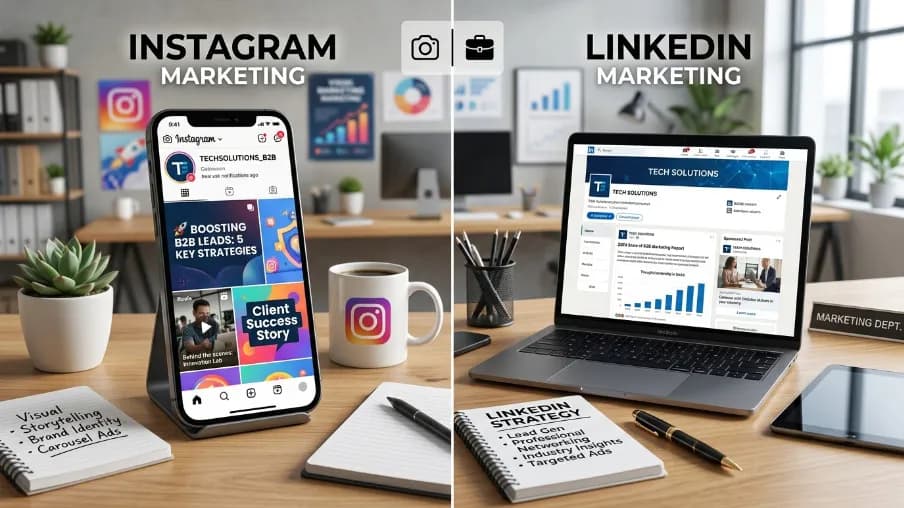
Instagram vs LinkedIn marketing for B2B refers to the choice of which platform carries which part of a business's social strategy: LinkedIn for direct lead generation and decision-maker outreach, and Instagram for brand awareness, employer branding, and reaching younger buyers earlier in their careers. LinkedIn's visitor-to-lead conversion rate (roughly 2.74%) is close to three times higher than the next-best major platform, which is why most B2B pipelines run through it. Instagram rarely closes a B2B deal on its own, but it can warm up a prospect who later converts through LinkedIn, email, or your website.
Key Takeaways
LinkedIn is the lead-generation engine. Around 8 in 10 B2B social leads come from LinkedIn, and its visitor-to-lead conversion rate (~2.74%) beats every other major platform.
Instagram is the awareness and trust-building layer. B2B engagement rates average only 1.2%–2.8%, but it's strong for employer branding, culture content, and reaching Gen Z decision-makers.
LinkedIn ads cost more but target better. CPC runs $5–$15+ versus Instagram's $0.25–$1.30, but LinkedIn lets you target by job title, seniority, and company size.
The best strategy uses both. Run awareness campaigns on Instagram, then retarget the same audience with LinkedIn lead-gen forms once they've seen your brand.
Choose based on your buyer, sales cycle, and budget. Long, complex B2B sales cycles favor LinkedIn; smaller budgets should start with organic LinkedIn content before layering in Instagram ads.
If you run a B2B company, I bet you've asked this question at least once: "Should our budget go to LinkedIn, or is Instagram worth a shot too?" I get asked this by founders and marketing leads almost every week, and there's no one-line answer but there is a clear, data-backed one. Everything below is based on 2026 industry benchmark reports, current ad-platform pricing data, and patterns we see running B2B campaigns for clients at CyberCraft Bangladesh.
Why This Question Keeps Coming Up in 2026?
Budgets are tighter than they were two years ago, and nobody wants to spend money guessing. Both platforms have changed a lot recently. LinkedIn added more video formats, AI-assisted targeting, and a growing creator and newsletter ecosystem. Instagram leaned harder into Reels and in-app shopping. So the old advice, "just use LinkedIn for B2B," isn't the complete picture anymore. Some B2B brands, especially in tech, design, and creative services, are getting real traction on Instagram too.
LinkedIn Marketing for B2B Companies: Data Behind the Hype

LinkedIn is still the biggest name in this space, and the numbers back that up.
LinkedIn now has more than 1.2 billion members worldwide, and it remains the platform most B2B marketers rely on for content distribution and lead generation. Roughly 87% to 97% of B2B marketers use LinkedIn in some form, and around 8 in 10 B2B social leads flow through this single platform. That's a big share, and it's not an accident. People arrive on LinkedIn already in "work mode." They're thinking about their job, their industry, their next vendor decision. That mindset makes them far more receptive to business content than they would be on a leisure-first app.
Direct answer for the "LinkedIn vs Instagram conversion rates" question: LinkedIn's visitor-to-lead conversion rate runs at roughly 2.74%, close to three times higher than the next-best major social platform. If your goal is filling a pipeline with qualified leads, this single number tells you most of what you need to know.
LinkedIn Organic Marketing: What Actually Earns Engagement Now
Here's what a lot of people still get wrong: LinkedIn isn't just stiff, corporate posts anymore. In 2026, the content that performs best is:
Short, punchy thought-leadership posts from real people, not just brand pages
Native video and short clips that explain a problem or a lesson learned
Carousels that teach something useful in 5 to 8 slides
Comment sections where the founder or team actually shows up and replies
Marketers consistently rank LinkedIn as the most effective channel for building thought-leadership authority, and a large share of B2B decision-makers say they review this kind of content before they ever talk to sales. So if your CEO or sales lead posts real insights weekly, that's not vanity metrics. That's pipeline work.
LinkedIn Lead Generation Strategies That Are Working Right Now
If lead generation marketing is your main goal, here's where I'd focus first:
Lead-gen forms on Sponsored Content: These auto-fill with the prospect's LinkedIn profile data, which lowers friction and lifts form completion rates.
Thought Leader Ads: These boost an executive's organic post instead of a branded ad unit, and they tend to earn stronger engagement at a lower cost per click than standard Sponsored Content.
Sales team activation: Encourage your sales reps to post and comment consistently. Buyers trust people over brand pages.
Retargeting website visitors with Message Ads: Open rates for LinkedIn Message Ads typically land between 35% and 55%, which is high compared to cold email.
Narrow job-title targeting over broad industry targeting: Precision costs more per click but produces far fewer wasted leads.
LinkedIn Advertising for B2B: Is the Cost Worth It?
LinkedIn ads are expensive, but you're paying for precision that usually pays for itself. Average cost-per-click typically falls between $5 and $9, climbing past $15 for senior job titles or competitive industries, and cost per lead usually lands between $60 and $175.
You can target by job title, company size, industry, and seniority level. For a B2B software company selling to IT directors, that precision often beats a cheaper, broader audience that never converts into a sales conversation. Companies that stick with LinkedIn ads long enough to optimize campaigns generally report strong satisfaction with ROI, especially when using lead-gen forms and Thought Leader ad formats.
Instagram Marketing for B2B Brands: Where It Actually Shines
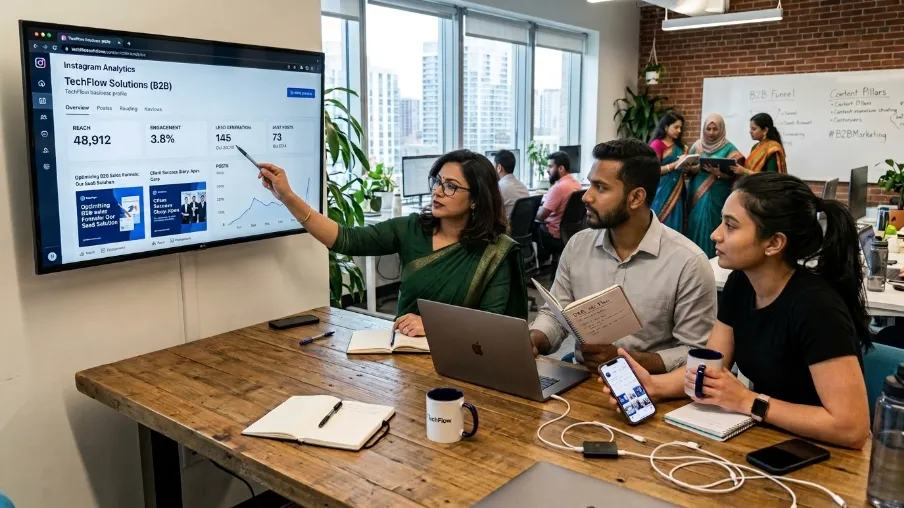
Now let's flip to Instagram. This is where B2B teams tend to get it wrong in one of two directions. Some write it off entirely. Others treat it like a second LinkedIn and post dull product shots. Both are mistakes.
Instagram is still mostly a consumer-first platform. Around 71% of B2B marketers use it, well below LinkedIn's adoption rate, and engagement rates for B2B and tech accounts average only around 1.2% to 2.8%, much lower than lifestyle or fashion niches. This isn't a strong channel for cold lead generation in most B2B categories.
But Instagram is genuinely useful for a few specific goals, which answers the "Instagram for business networking" and "B2B brand awareness on Instagram" intent directly:
Employer branding: Showing your team, culture, and day-to-day office life builds trust before someone even applies for a job or requests a quote.
Behind-the-scenes trust building: Client wins, product demos, and process videos humanize a brand that might otherwise feel faceless.
Reaching younger buyers and industry influencers: As more Gen Z professionals move into procurement and decision-making roles, Instagram becomes a quiet, long-game brand-awareness channel.
Business networking through DMs and comments: Many B2B service providers, consultants, and agencies build warm relationships in Instagram comments and DMs before a conversation ever moves to email or LinkedIn.
Instagram Content Strategy for B2B: What Actually Works
If you're going to invest in Instagram, don't just repost your LinkedIn content. Instead:
Lean into Reels. Short-form video consistently earns higher engagement than static posts on this platform.
Show faces, not just logos. Audiences engage more with real employees than polished brand graphics.
Use Stories for quick polls, behind-the-scenes moments, and event coverage.
Post consistently. Roughly 70% of marketers plan to increase their Instagram investment this year, which means competition for attention is only going up.
Educational content, quick "how we solved this" clips, and short tips tend to outperform pure product promotion for B2B accounts on Instagram.
LinkedIn vs Instagram for Lead Generation: Direct Comparison
Let's answer this plainly, since it's what most people actually searching this topic want to know.
For direct lead generation, LinkedIn wins for almost every B2B category. The intent is there. The targeting is there. The conversion data supports it again and again.
For brand awareness and trust-building with a broader or younger audience, Instagram plays a supporting role. It rarely closes a B2B deal on its own, but it can warm up a prospect who later converts through LinkedIn, email, or your website.
A simple way to think about it: LinkedIn is where your buyer researches and decides. Instagram is where they first hear your name and start trusting it.
Instagram Ads vs LinkedIn Ads: Cost and Targeting Compared
Cost is often the deciding factor for smaller B2B teams, so here's a direct comparison.
| LinkedIn Ads | Instagram Ads |
|---|---|---|
Average CPC | $5 – $12 (up to $15+ for senior job titles) | $0.25 – $1.30 |
Average CPM | $25 – $55 | Generally under $15 |
Targeting strength | Job title, industry, seniority, company size | Interests, behavior, demographics |
Best use case | Lead-gen forms, account-based marketing, decision-maker outreach | Awareness, retargeting, employer branding |
Typical B2B fit | Strong | Moderate to weak, depends on industry |
Instagram ads cost far less per click, but LinkedIn ads reach the exact people who sign off on B2B purchases. Cheaper isn't better when the audience isn't the right one for your offer.
A tactic several of our clients use well: run awareness campaigns on Instagram to build familiarity, then retarget that same audience with a LinkedIn lead-gen form once they've seen your brand a few times. Each platform does the part it's actually good at.
B2B Audience on LinkedIn vs Instagram: Who's Actually There
This distinction explains almost every other stat in this article, so it's worth spelling out.
LinkedIn's user base skews professional and educated. A large share of members hold a bachelor's degree or higher, and most people open the app already in a work mindset, there to network, learn, and evaluate vendors.
Instagram's audience is broader and younger on average, and most people open it to be entertained or inspired, not to research vendors. That doesn't mean B2B buyers aren't on Instagram. They are. They're just not in "buying mode" when they're scrolling it.
Social Media ROI for B2B Marketing: How to Measure It Properly
Don't just track followers or likes. For B2B, track:
Marketing qualified leads (MQLs) generated per platform
Cost per lead, broken down by channel, not blended together
Pipeline influenced, not only last-click conversions
Content engagement from your actual target job titles, not raw engagement rate alone
LinkedIn tends to win on MQLs and influenced pipeline. Instagram tends to win on cost-efficient reach and brand recall. Measure both on their own terms instead of forcing one platform to justify itself using the other's metrics.
Common Digital Marketing Mistakes B2B Brands Make on Social Media
Before you pick a platform, it's worth naming the mistakes I see most often. These digital marketing mistakes quietly waste more budget than choosing the "wrong" platform ever does:
Posting the same content on every channel: A LinkedIn carousel and an Instagram Reel need different pacing, tone, and length. Copy-pasting one into the other usually flops on both.
Chasing followers instead of the right audience: A smaller, highly relevant audience of decision-makers beats a large, generic one every time in B2B.
Treating social as a broadcast channel: Real growth on LinkedIn especially comes from replying to comments and starting conversations, not just publishing and walking away.
Skipping paid entirely because organic feels "free." : Organic reach has limits. A modest ad budget behind your best-performing organic posts often outperforms starting a paid campaign from scratch.
No clear owner for the strategy: Social media marketing strategy work that gets split across five people with no single owner tends to drift and lose consistency within a few months.
Fixing even two or three of these usually moves the needle faster than switching platforms.
Creative Digital Marketing Ideas Worth Testing for B2B
If your content feels stale, a few creative digital marketing angles tend to work well for B2B audiences on both platforms:
Turn a client onboarding call into a short "what we learned" video series
Run a monthly "ask us anything" post or Story where your team answers real buyer questions
Document a project from kickoff to delivery instead of only showing the finished result
Feature a customer's win as the hero of the story, with your product as a supporting detail, not the headline
None of these require a big production budget. They just require consistency and a willingness to show real work, not polished marketing gloss.
Choosing the Best Social Media Platform for B2B: A Simple Framework
Ask yourself three questions.
1. Who actually makes the buying decision? If it's a manager, director, or executive researching solutions, lead with LinkedIn.
2. How long is your sales cycle? Long, complex sales cycles (enterprise software, consulting, manufacturing) favor LinkedIn's trust-building content. Shorter, more visual purchases (design tools, creative services, some SaaS) can also use Instagram well.
3. What's your realistic budget? Small budget, tight ROI requirements? Start with organic LinkedIn content before spending on ads. Larger budget with room to test? Layer in Instagram for top-of-funnel awareness.
If you're still unsure, here's my honest, experience-based recommendation: start with LinkedIn. Build a solid organic presence first. Add Instagram once you have a clear visual brand story worth telling.
LinkedIn Business Growth Tips: A Short Action List
A few practical moves that tend to move the needle fastest for B2B companies chasing steady digital growth on LinkedIn:
Post 3 to 5 times a week, mixing thought leadership, case studies, and quick lessons learned
Get 2 to 3 people at your company posting regularly, not just one brand account
Reply to every comment within the first hour, since early engagement affects how far a post spreads
Repurpose one strong post per month into a Sponsored Content ad
Track which post topics generate the most profile visits and double down on those themes
B2B Digital Marketing Platforms: Where LinkedIn and Instagram Fit In
It's worth zooming out for a second. Neither platform needs to carry your entire digital marketing strategy alone. Most B2B companies that see strong results run LinkedIn and Instagram alongside email nurturing, a content-rich website, and often paid search for high-intent buyers. Social platforms are usually the awareness and trust layer that feeds the rest of that digital marketing system, not the whole system by themselves.
The Best Approach: Using Both Platforms Together
Here's the part most "versus" articles skip. For most companies, this isn't really an either-or decision.
A strong B2B social media strategy in 2026 typically looks like this:
LinkedIn: founder posts, case studies, lead-gen ads, sales team engagement
Instagram: company culture, event recaps, quick product demos, employer branding
Shared assets: repurpose your best LinkedIn carousel into an Instagram Reel script, or turn a client testimonial into content for both
This way, each platform does what it's naturally suited for, instead of being forced into the other's role.
Final Thoughts
After reviewing the current data and running these campaigns for clients, one thing is clear: LinkedIn should carry most of your B2B lead generation efforts. Instagram can support your brand story, but it shouldn't be your primary lead source unless you're targeting a highly visual, younger-skewing niche.
When it comes to Instagram vs LinkedIn marketing for B2B, the most successful companies don't treat the platforms the same. The real win comes from giving each platform a clear role instead of copying one strategy onto both and hoping it sticks. A well-built social media marketing strategy, backed by the right creative and the right platform mix, is one of the fastest paths to sustainable digital growth for a B2B company.
If you want help building a B2B social strategy that actually converts, whether that's LinkedIn lead generation, Instagram brand content, or a mix of both, our team at CyberCraft Bangladesh can build and run it for you. Check out our digital marketing services to see how we approach this for B2B companies, and let's talk about what will actually move your pipeline forward.
Frequently Asked Questions About Instagram vs LinkedIn Marketing for B2B
Is LinkedIn or Instagram better for B2B lead generation?
LinkedIn is better for direct lead generation in most B2B industries. It delivers a notably higher visitor-to-lead conversion rate (roughly 2.74%) and reaches decision-makers directly through job title, seniority, and industry targeting. Instagram can support the top of the funnel, but it rarely produces direct leads at the same volume or quality.
Can Instagram work at all for B2B brands?
Yes, but mainly for brand awareness, employer branding, and reaching younger buyers earlier in their careers. Engagement rates for B2B and tech accounts average only 1.2%–2.8%, and Instagram rarely drives direct leads the way LinkedIn does. Its real value is warming up prospects who later convert on LinkedIn, email, or your website.
Are LinkedIn ads worth the higher cost for a small B2B business?
Often yes, if your product has a strong deal value and a clear target job title. LinkedIn's CPC ($5–$15+) is much higher than Instagram's, but the higher cost is usually offset by better targeting precision and higher-quality leads, especially when paired with lead-gen forms and Thought Leader ad formats.
How much should a small B2B company budget for LinkedIn ads?
Most benchmarks suggest starting with at least $1,000 to $3,000 a month to gather enough data to properly optimize campaigns. Smaller budgets can still work for organic content and small test campaigns while you build toward that spend level.
Should I post the same content on both LinkedIn and Instagram?
No, reformat it instead. Turn a LinkedIn article into a short Instagram Reel script, or a case study into a carousel adjusted for each platform's tone and audience expectations. Copy-pasting the same post into both usually underperforms on each.
What's the difference in cost per click between LinkedIn and Instagram ads?
LinkedIn's average CPC runs $5–$12, climbing past $15 for senior job titles, while Instagram's average CPC runs $0.25–$1.30. Instagram is far cheaper per click, but LinkedIn reaches the exact decision-makers who sign off on B2B purchases, so the cheaper platform isn't automatically the better value.
Can I use LinkedIn and Instagram together instead of choosing one?
Yes, and for most companies this works better than picking one. A common approach is running awareness campaigns on Instagram to build familiarity, then retargeting that same audience with a LinkedIn lead-gen form once they've seen the brand a few times, letting each platform do what it's naturally suited for.
Sources
ConnectSafely, "B2B LinkedIn Marketing: The Complete Guide for 2026"
Martal, "LinkedIn Statistics 2026: Key B2B Benchmarks & Data"
Marketing LTB, "LinkedIn Ads Statistics 2026: 91+ Stats & Insights"
Axis Intelligence, "LinkedIn Statistics 2026: Members, Revenue, Engagement & B2B Data"
Benly.ai, "LinkedIn Sponsored Messages (Message Ads): A 2026 Guide"
StackMatix, "LinkedIn Ads Cost in 2026: Complete CPC Pricing Guide"
Sales So, "LinkedIn B2B Statistics 2025 (Data That Matters)"
Sprout Social, "38 Instagram Statistics You Need to Know for 2026"
Outfame, "Instagram for Business: 55 Statistics Marketers Need in 2026"
Top Growth Marketing, "Instagram Ads Cost in 2026: CPM, CPC, and CPA Benchmarks"
Prospeo, "Average B2B Lead Conversion Rate: 2026 Benchmarks"
PostEverywhere, "Social Media Engagement Rate Benchmarks by Platform (2026)"
Impactable, "The Ideal Budget for Running LinkedIn Ads in 2026"

I’m Mitu Das, a JavaScript developer, ERP product architect, and SEO specialist from Bangladesh. I work at CyberCraft Bangladesh, where I help build simple, scalable software, SaaS platforms, and business solutions. My goal is to create technology that helps companies save time, automate daily tasks, and grow faster. I enjoy combining development, product ideas, and SEO strategies to create useful digital solutions for modern businesses.
Writes about