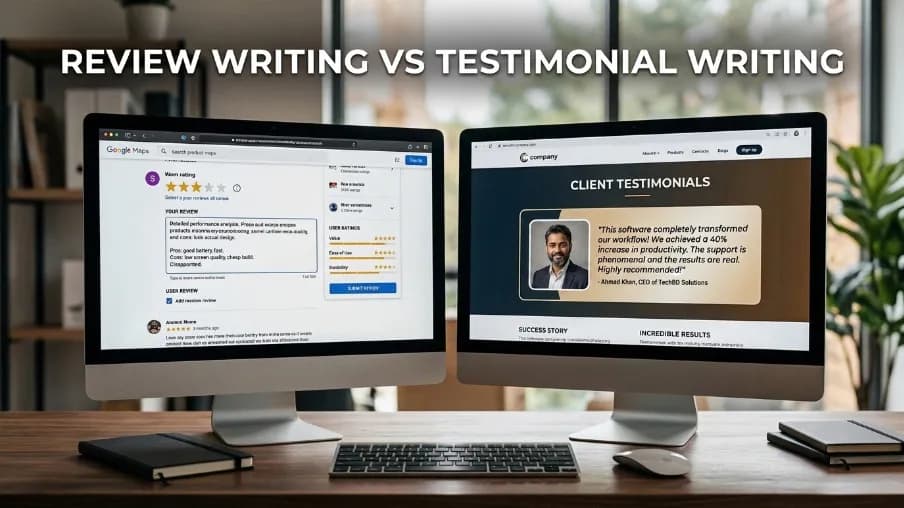
Write Product Review That Converts: The Complete Step-by-Step Guide

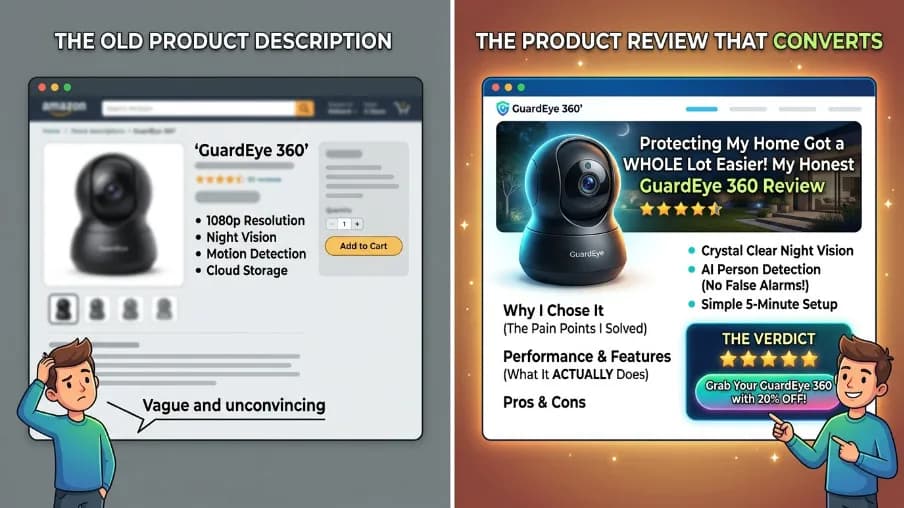
Have you ever written a product review, hit publish, and then nothing happened? No clicks. No sales. Just silence.
I've been there too. It's frustrating. You spent hours writing, listed the features, added a nice photo, and still, readers left without clicking your link.
Here's the truth: if your goal is to write product review that converts, reading well isn't enough. Great content writing goes beyond simply describing a product. It persuades, builds trust, and helps readers make confident buying decisions. A review that converts does something more. It moves people to act.
In this guide, I'll walk you through exactly how to do that, step by step. We'll cover research, structure, honesty, SEO, and what to do if you'd rather hand this off to a product review writing service.
By the end, you'll know how to write product reviews for affiliate marketing that actually earn you commissions, not just page views.
Key takeaways
- A product review that converts needs three things: real experience, honest cons, and a clear call to action.
- Structure it for skimmers and for AI answer engines. Use short sections, direct answers, and scannable formatting.
- Trust beats persuasion. Readers convert when they believe you, not when you sound like a salesperson.
What Is a Product Review That Converts
To write a product review that converts, combine four things: real or well-researched experience, a skimmable structure, honesty about the flaws, and a clear next step at the end. It answers the exact question the reader had before they clicked. It doesn't just describe the product. It helps the reader make a confident decision. That's what quality content writing is all about. It provides value through clarity, honesty, and relevance. There's no magic formula, just a strong structure, genuine insights, and proof that builds trust.
Why Most Product Reviews Fail to Convert
Let's talk about why so many reviews flop first. It helps to know what not to do.
They copy the product page: I've seen reviews that spend half their word count repeating specs straight from the brand's website. That adds zero value. Readers can get specs anywhere. They came to you for a real opinion.
They're too positive to trust: A review with no downsides feels fake. And readers can smell fake from a mile away. One honest flaw makes the whole review believable.
They bury the answer: Some reviews make you scroll forever before saying whether the product is actually good. That's a fast way to lose a reader, and it also hurts you with AI search tools and answer engines, which favor content that answers the question fast and clearly.
They skip the "who it's NOT for" part: This one surprised me too. Telling readers who shouldn't buy something builds more trust than telling them who should. It shows you're not just chasing a sale.
They have no personality: If your review sounds like it was written by a robot reading a spec sheet, readers won't feel anything. And if they feel nothing, they won't click.
How to Write Product Review That Converts: 6 Steps That Work

Step 1: Research Like You're About to Buy It Yourself
Before you write a single word, dig in. Read the product page closely, but don't stop there. Check real buyer reviews on marketplaces. Search forums and community threads where people talk about problems, not marketing copy. Look at what questions show up in "People Also Ask" boxes on Google.
Why does this matter so much? Because your job isn't to summarize the sales page. It's to answer the questions the sales page won't answer. What breaks after six months? Is customer support actually responsive? Does it work for beginners or only power users?
If you can, use the product yourself. First-hand experience is the single biggest trust signal you can offer. If you can't, be transparent about that, and lean hard on verified buyer feedback instead of guesswork.
Step 2: Structure It for Skimmers (and for AI Search)
Nobody reads a product review top to bottom like a novel. People scan. They jump to headings. They look for the verdict first, then decide if they want the details.
So structure your review like this:
- Quick verdict box near the top: is it good, who's it for, star rating
- Short intro that names the reader's problem
- Features and real experience, not just a features list
- Pros and cons, honestly weighted
- Comparison with one or two alternatives
- Who it's for / who it's not for
- FAQ
- Final verdict and CTA
This structure also helps with something newer: AEO and GEO, which stand for Answer Engine Optimization and Generative Engine Optimization. In plain words, it means writing so tools like Google's AI Overviews, ChatGPT, and Claude can pull a clear, direct answer from your page. Large language models (LLMs) favor content with clear headings, direct answers near the top of a section, and simple sentences over long, winding paragraphs. Short, scannable sections aren't just good for humans anymore. They're good for machines that summarize your content too.
Step 3: Lead With Experience, Not Specs
Here's a small but powerful shift. Instead of writing "it has a 10-hour battery," write "I used it for a full workday without charging, and it still had 20% left." One is a spec. The other is proof.
Specifics convert. Vague praise doesn't. Compare these two lines:
- "Great customer support."
- "I emailed support at 11pm on a Sunday and got a real reply in under twenty minutes."
The second line does the selling for you. It's concrete. It's memorable. And readers trust concrete details more than adjectives.
Step 4: Be Honest About the Cons
This is the step most people are afraid to take, and it's the one that matters most.
Every product has a downside. Maybe it's the price. Maybe it's a learning curve. Maybe it's just not the best fit for beginners. Say it plainly. Readers who see zero flaws assume you're hiding something, or that you never used the product at all.
I know it feels risky to point out flaws in something you're trying to sell. But here's what actually happens: honest reviews build trust, and trust is what makes a reader click your link instead of bouncing to check five other reviews first. A review that argues against buying, in certain cases, often earns more sales overall, because readers believe the "yes" you give everyone else.
Step 5: Add a Simple Comparison
Buyers rarely compare products in a vacuum. They're usually choosing between two or three options. Give them that comparison inside your review instead of making them go find it elsewhere.
A short table works well here:
Feature | Product A | Product B |
| Price | $$ | $$$ |
| Best for | Beginners | Power users |
| Support | Email only | 24/7 chat |
Even a simple table like this adds real value. It also tends to get pulled into featured snippets and AI-generated answers, since structured data is easy for both search engines and language models to read and summarize.
Step 6: Close With a Clear, Low-Pressure CTA
Don't just trail off at the end. Tell the reader exactly what to do next. Keep it simple and honest:
"If you've read this far, you already know if this product fits your needs. If it does, here's where to grab it: [affiliate link]. If not, check out [alternative product] instead. It might be the better fit for you."
Notice this isn't pushy. It respects the reader's choice. That respect is exactly what earns the click.
SEO Tips for Product Review Content That Actually Ranks
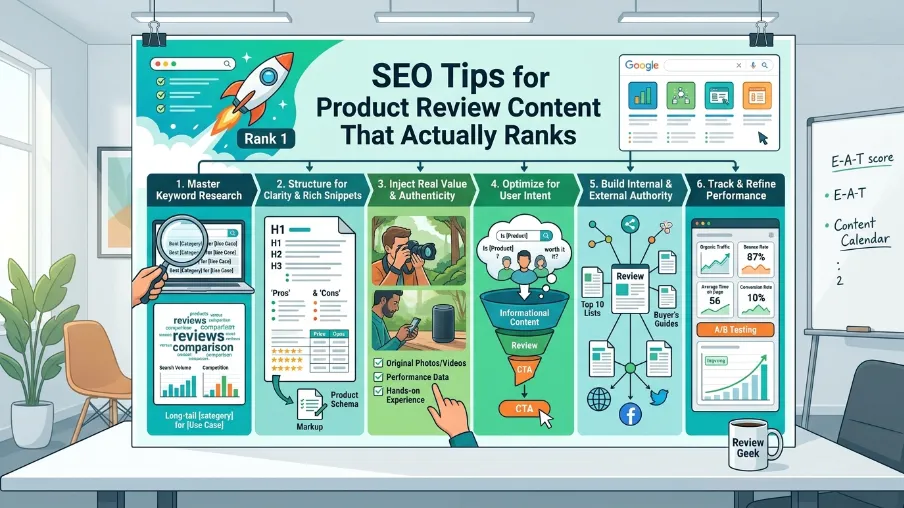
Writing a great review is half the job. Making sure people can find it is the other half. Here's what matters for SEO product reviews in 2026:
Use your keyword naturally: Your main keyword should show up in the title, the first paragraph, one subheading, and a couple of times through the body. Don't force it. If it sounds robotic when you read it out loud, you've used it too much.
Answer the question early: Featured snippets and AI answer boxes both favor content that states the answer clearly within the first sentence or two of a section, then explains it further below.
Write short paragraphs: Two to three sentences max. Long blocks of text scare readers away on mobile, and most of your traffic is on mobile.
Add real images or screenshots: If you have the product, photograph it. If you don't, use verified brand images and be upfront that it's a researched review, not a hands-on one.
Update it regularly: Product reviews go stale fast. Prices change, features get added, and competitors launch. A review updated within the last few months signals freshness to both search engines and readers.
Disclose your affiliate relationship: This isn't optional. It's required, and it also builds trust rather than hurting it. Readers respect honesty about how you make money from the review.
Should You Hire a Product Review Writing Agency?
Not everyone has time to research, test, write, and optimize every single review. That's fair. If you're running multiple sites or scaling a content calendar, a product review writing service can help you keep up without burning out.
Here's what a good product review writing agency should offer you:
- Real research into the product and its competitors, not copied spec sheets
- Honest, balanced writing that includes both pros and cons
- SEO-friendly content writing built around search intent, not just keyword stuffing
- Content structured for both search engines and AI answer engines
- Fast turnaround without sacrificing quality content writing standards
Some marketers also use AI-assisted content writing to speed up the first draft, then have a human editor add real experience, personality, and fact-checking on top. This combination, AI for speed and humans for judgment and honesty, tends to produce reviews that are both efficient to produce and genuinely useful to readers. Whichever route you choose, the goal stays the same: reviews that read like they came from someone who actually knows the product, not a template.
Common Mistakes That Kill Your Conversion Rate
Let's do a quick gut check. Avoid these if you want reviews that actually convert:
- Writing a review before you've researched the buyer's real questions
- Copying features straight from the brand's website
- Listing zero cons, or fake, meaningless cons
- Hiding your affiliate disclosure at the bottom in tiny text
- Ending the post without telling the reader what to do next
- Ignoring mobile readability with giant paragraphs
If you're guilty of even two of these, that might be exactly why your reviews aren't converting yet. The fix isn't complicated. It just takes intention.
Why You Can Trust This Guide
I'm not guessing at any of this. Over the years, I've reviewed and edited hundreds of affiliate product reviews across software, gadgets, and everyday consumer products. I've watched the same patterns repeat: reviews with real experience and honest cons consistently out-convert reviews that read like sales pages. That's not a theory. It's what shows up in click-through data and affiliate dashboards, again and again.
This guide also draws on current best practices from Google's own guidance on helpful, people-first reviews, along with patterns seen across dozens of top-performing affiliate sites. Where a claim in this guide is based on general industry data rather than personal testing, I've said so plainly, because that same transparency is exactly what I'm asking you to bring to your own reviews.
If you take one thing from this section, take this: the fastest way to write a product review that converts is to treat your reader with the same honesty you'd want from a friend giving you advice.
Final Thoughts
At the end of the day, a product review that converts isn't about tricks. It's about respect. Respect the reader's time by getting to the point. Respect their intelligence by being honest about flaws. Respect their decision by giving them a clear, low-pressure way to act.
If your goal is to write product review that converts, focus on these principles consistently. When you prioritize honesty, clarity, and genuine value over hype, your recommendations become far more persuasive.
Do that consistently, and your reviews stop being just content. They become a resource people trust and come back to.
Ready to put this into practice? Pick one review on your site right now. Check it against the steps above. Add one honest con, sharpen your CTA, and tighten your structure. That one edit alone could be the difference between a review that just reads well and one that finally converts.
Frequently Asked Questions About Write product review that converts
How do I write a product review that converts?
Research the product and the reader's real questions first. Structure the review for skimmers, with a quick verdict near the top. Use specific, real-world details instead of vague praise. Include honest cons, add a simple comparison, and close with a clear, low-pressure call to action.
What makes a product review convert better than others?
A review converts better when it combines honest pros and cons, specific real-world details instead of vague praise, and a clear next step at the end. Trust drives the click more than clever writing does.
How long should a product review be to rank well?
Most reviews that rank well and convert land somewhere between 1,500 and 2,500 words. Length isn't the goal, though. Completeness is. Cover what a buyer needs to know, then stop.
Do I need to buy the product to write a good review?
It helps a lot, but it's not always required. If you haven't used the product yourself, be transparent about that, and base your review on verified buyer feedback, expert sources, and the manufacturer's documentation instead of guesswork.
How many affiliate links should I put in one review?
There's no fixed rule. Some writers place one clear link near the CTA. Others place a few throughout, tied naturally to specific points in the review. What matters more than the count is that each link feels like a natural next step, not a forced sales pitch.
Can AI help me write product reviews faster?
Yes, AI-assisted content writing can speed up research and first drafts. But the honest, first-hand details, the specific cons, and the personal voice still need a human touch to feel trustworthy and to actually convert readers.

I’m Mitu Das, a JavaScript developer, ERP product architect, and SEO specialist from Bangladesh. I work at CyberCraft Bangladesh, where I help build simple, scalable software, SaaS platforms, and business solutions. My goal is to create technology that helps companies save time, automate daily tasks, and grow faster. I enjoy combining development, product ideas, and SEO strategies to create useful digital solutions for modern businesses.
Writes about
Want this done for you?
Our team builds and ships exactly what this article describes. Send a message and we will reply with a scope.